What Is Going On
Most of the garage door openers in this part of Galveston went in during the same build wave as the houses themselves - 1978 to 1993, with a median year of 1984. That matters more than people think. A chain-drive opener from that stretch wasn't built with battery backup in mind, because battery backup for garage openers wasn't standard equipment yet. So when the power cuts, the opener just stops. No whine, no half-attempt, nothing. The door sits wherever it was when the lights went.
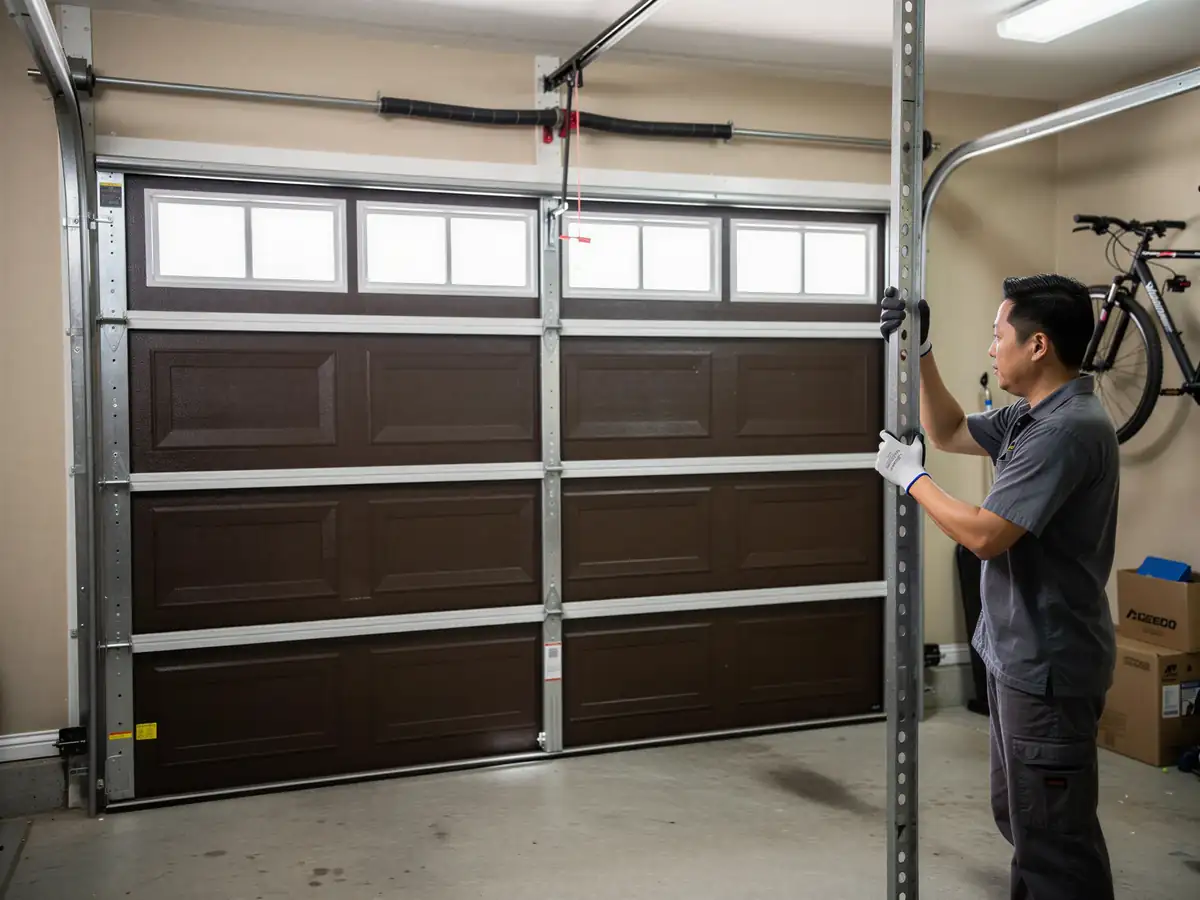
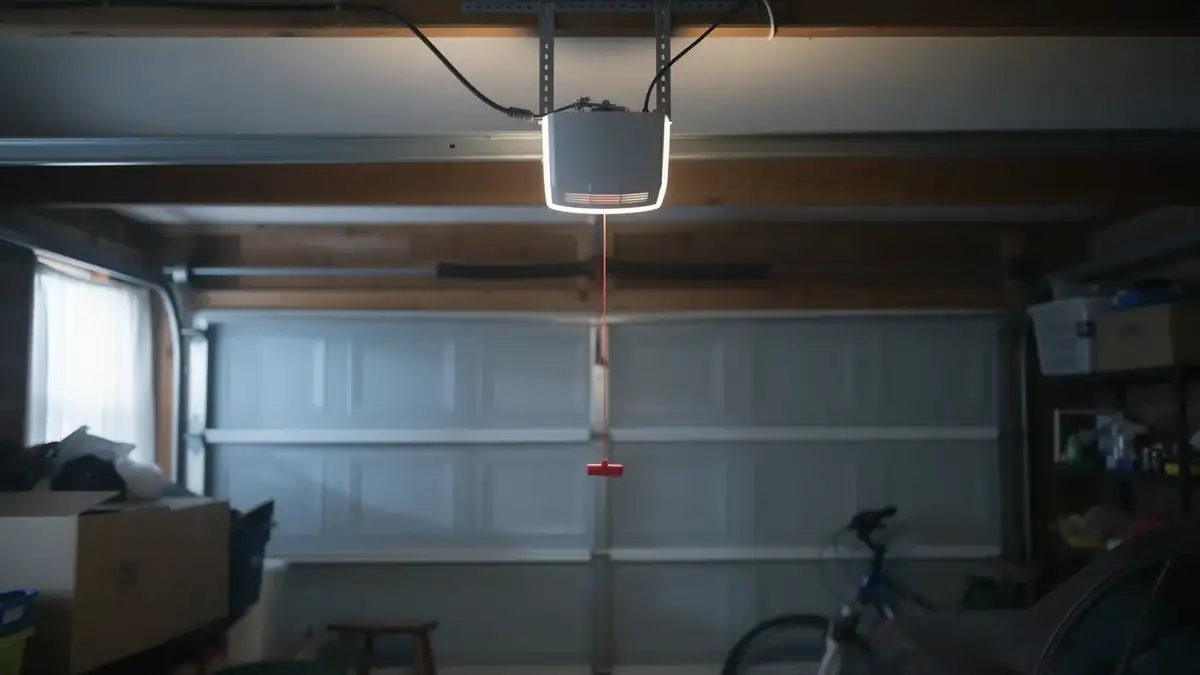
The fix for that moment is the manual release cord - the red handle hanging from the trolley. Pull it, and you can lift the door by hand, assuming the springs are still doing their job. A lot of owners have never used it and don't know where it is until the power's already out. That's a five-minute thing to learn, not a repair call.
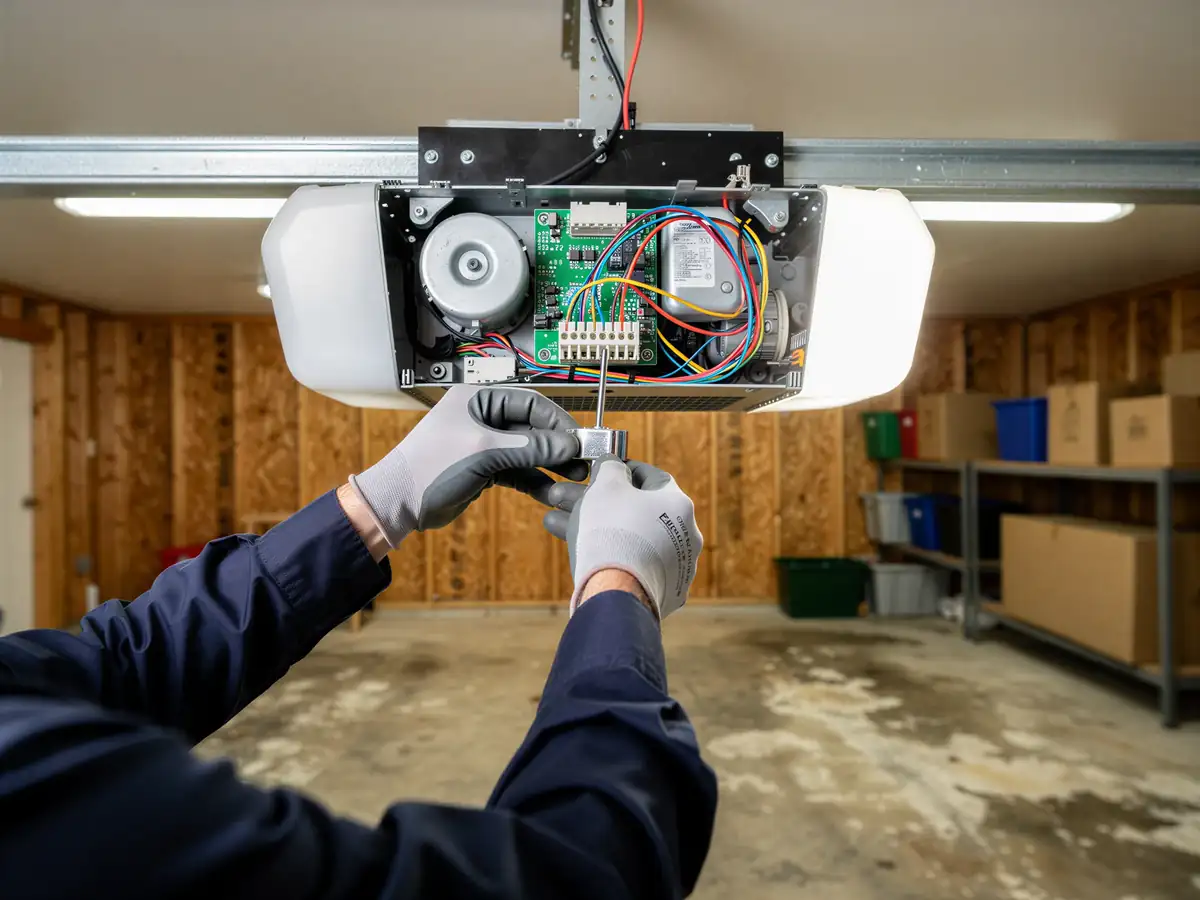
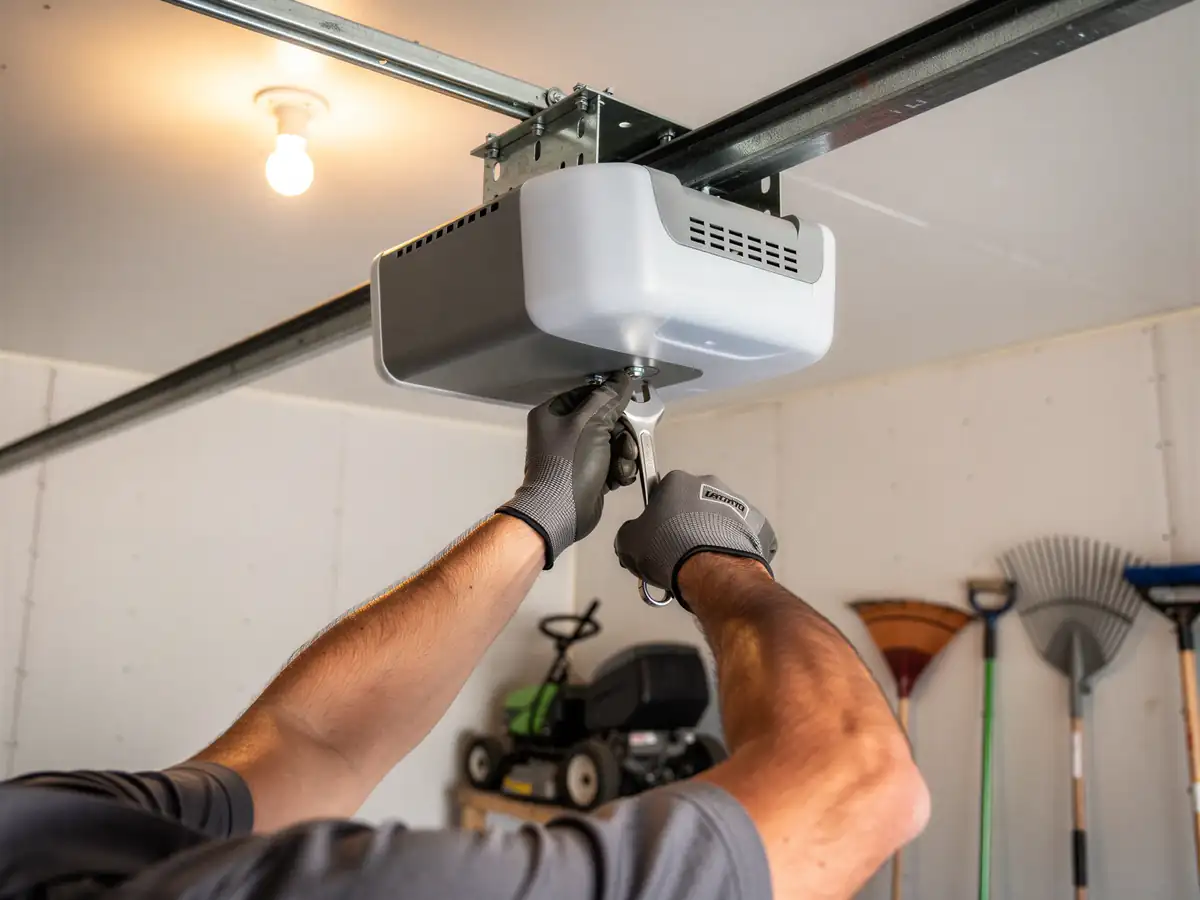
What does turn into a repair call is the opener itself failing to come back once power's restored. Circuit boards on units installed decades ago don't always survive a hard power cut, especially if there's been more than one over the life of the unit. The logic board fries, the opener looks dead, and the owner assumes the whole unit needs replacing when sometimes it's one board.
How Local Conditions Play In
Galveston's climate sits in a mild temperate band - no deep freeze, no extreme heat swings that crack gears or warp housings the way you'd see further inland or further north. That's actually good news for the mechanical side of an opener. Gears, belts, and chains here aren't fighting thermal stress the way they would somewhere with harsh winters.
What that means in practice: when an opener fails in this area, it's almost never a weather-damage story. It's an age story. A unit installed when the house was built in, say, 1985 is now pushing forty years old, and openers don't last that long regardless of climate. The motor windings wear, the logic board capacitors dry out, the travel limits drift. Mild weather doesn't slow any of that down - it just means you don't get the added freeze-related failures that owners elsewhere deal with on top of normal wear.
The practical upshot is that a power cut is often the moment that reveals an opener was already near the end, not the cause of the failure itself. The outage just happens to be what finally kills a board that was already weak.
The Cost of This Job
We're not going to quote a number here because opener jobs vary too much to be honest about one
A logic board swap is a different job than a full unit replacement, and we price after we've actually looked at what failed. What we can say is that this is an area where the median household income is $82,018, and across roughly 23,059 households and 15,503 owner-occupied houses, most people we talk to want the opener fixed rather than upgraded to something with smart features they don't need. Repair over replace is the default conversation here, not the exception.
- $82,018 median household income
- 23,059 households
- 15,503 owner-occupied
The honest limitation
If the logic board is gone and the manufacturer stopped making that board years ago - which happens with units from the 1980s and early 1990s build era this area has a lot of - repair isn't always possible. At that point replacement is the only real option, and we'll say so instead of chasing a part that doesn't exist anymore.
Leaving It Alone
An opener that only fails during power cuts feels like a non-issue - the power comes back, the opener works again, so why spend money on it. The problem is that an opener with a weak board after one outage is more likely to fail completely after the next one, powered interruption or not. Each hard stop is a little more stress on a board that's already thirty-plus years old on a lot of these 1978-1993 houses.
The other piece: if nobody in the house knows where the manual release is, a power cut during an actual need - leaving for work, getting a car out - turns into a stuck door instead of a five-second workaround. That's not a parts problem, it's just not knowing the house. Worth fixing before it matters, not after.