Why It Happens Here
Most of the housing in this service area went up between 1978 and 1993, with a lot of it clustered in the 1980s and 90s across five named pockets of the region. That matters for panels because a sectional door installed when one of those subdivisions was built is now pushing 30 to 45 years old. Steel and the finish on it don't last forever, and a door that age has been through a lot of open-and-close cycles before a single dent ever shows up.
The climate band here is mild temperate, which sounds like good news for a garage door, and in a lot of ways it is - you're not fighting hard freeze-thaw cycles that crack panel seams the way colder regions do. But mild and steady temperatures don't stop a panel from getting old. UV exposure over three or four decades still chalks out the paint, softens the foam core on insulated doors, and leaves seams more brittle than they look. Add an impact - a trailer hitch, a bike, a kid's errant throw - and an older panel that would have flexed fine at 10 years old just doesn't flex the same at 35.
We see this pattern repeat across the service area because the housing stock repeats. Different towns, same decade of construction, same failure mode showing up roughly on schedule.
The Symptom
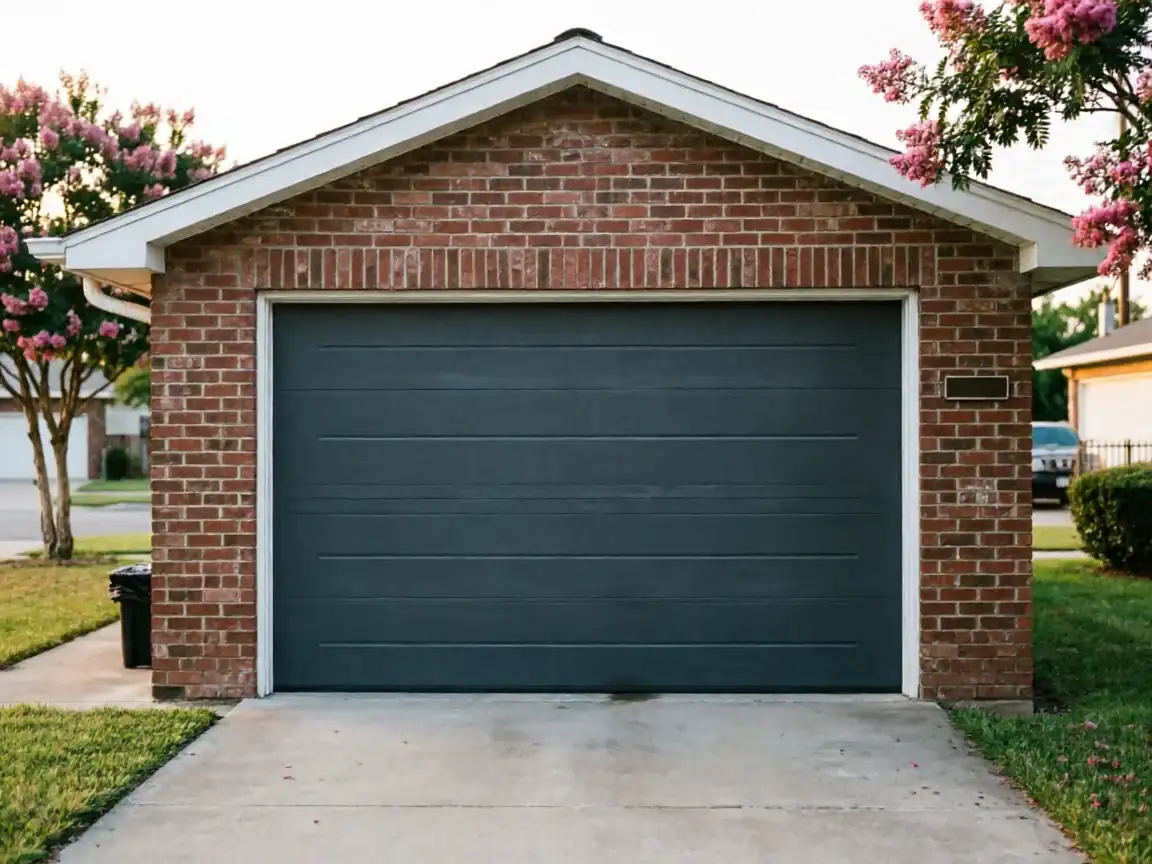
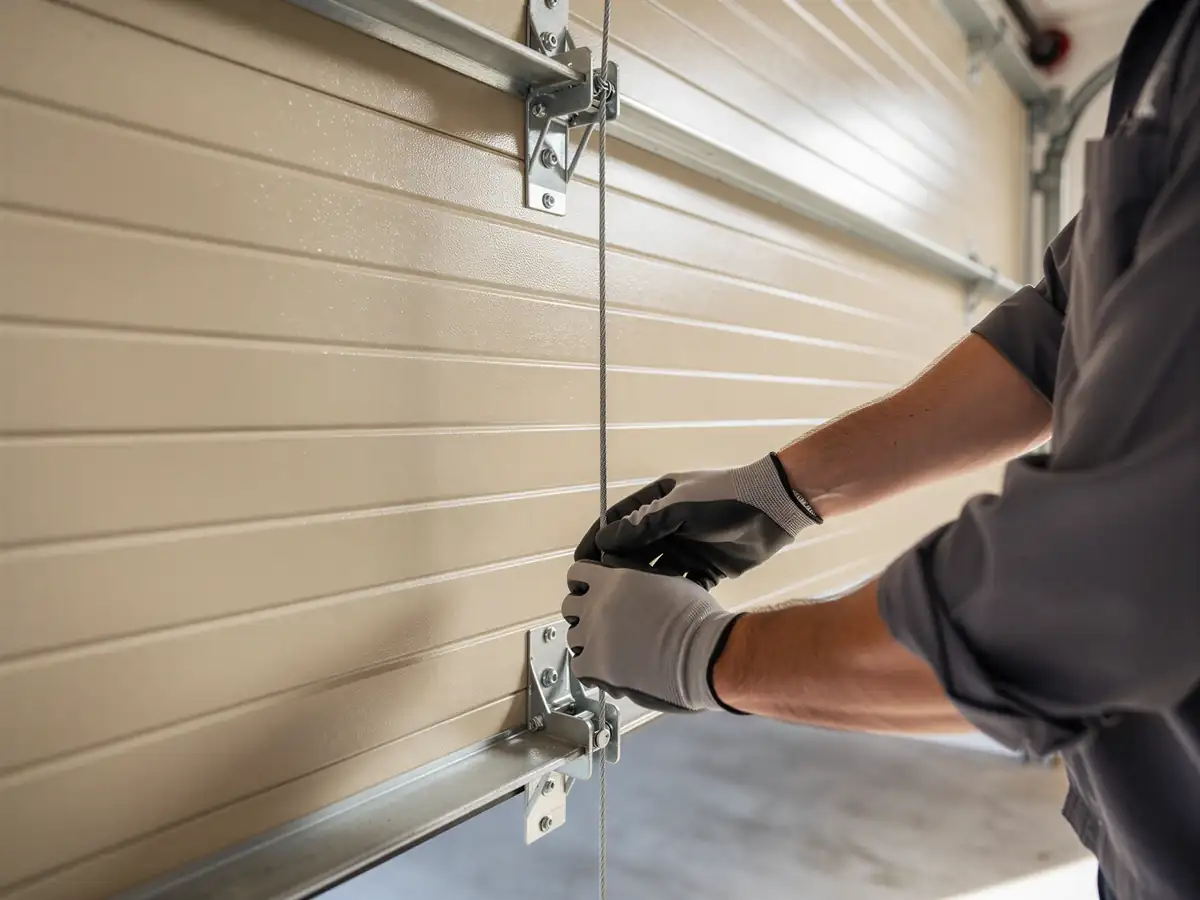
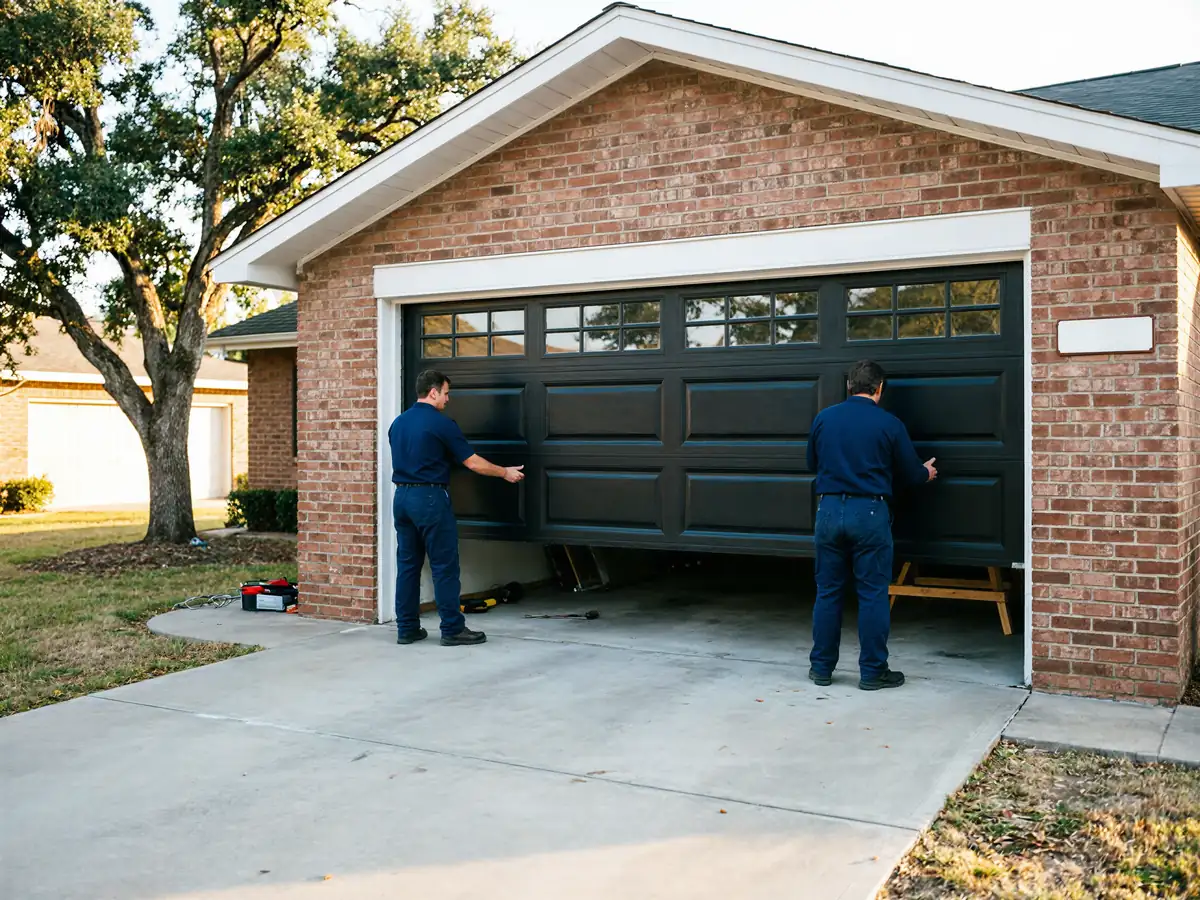
The giveaway is usually a single damaged panel on an otherwise working door - a dent, a crack along a seam, or a section that's visibly bowed compared to the ones above and below it. The opener still runs, the track still moves the door, but that one panel doesn't sit flush anymore, and on a sectional door that misalignment puts stress on the rollers and hinges next to it.
Sometimes it's not impact damage at all - it's just age catching up. A panel from the 1980s or early 90s construction wave can develop rust at the bottom edge where water sits, or the foam core can separate from the steel skin, leaving a panel that sounds hollow when you knock on it and flexes more than it should in wind.
Either way, the rest of the door usually isn't the problem. That's the part worth knowing before you assume the whole door needs to go.
The Cost of This Job
Panel replacement sits in a strange middle ground
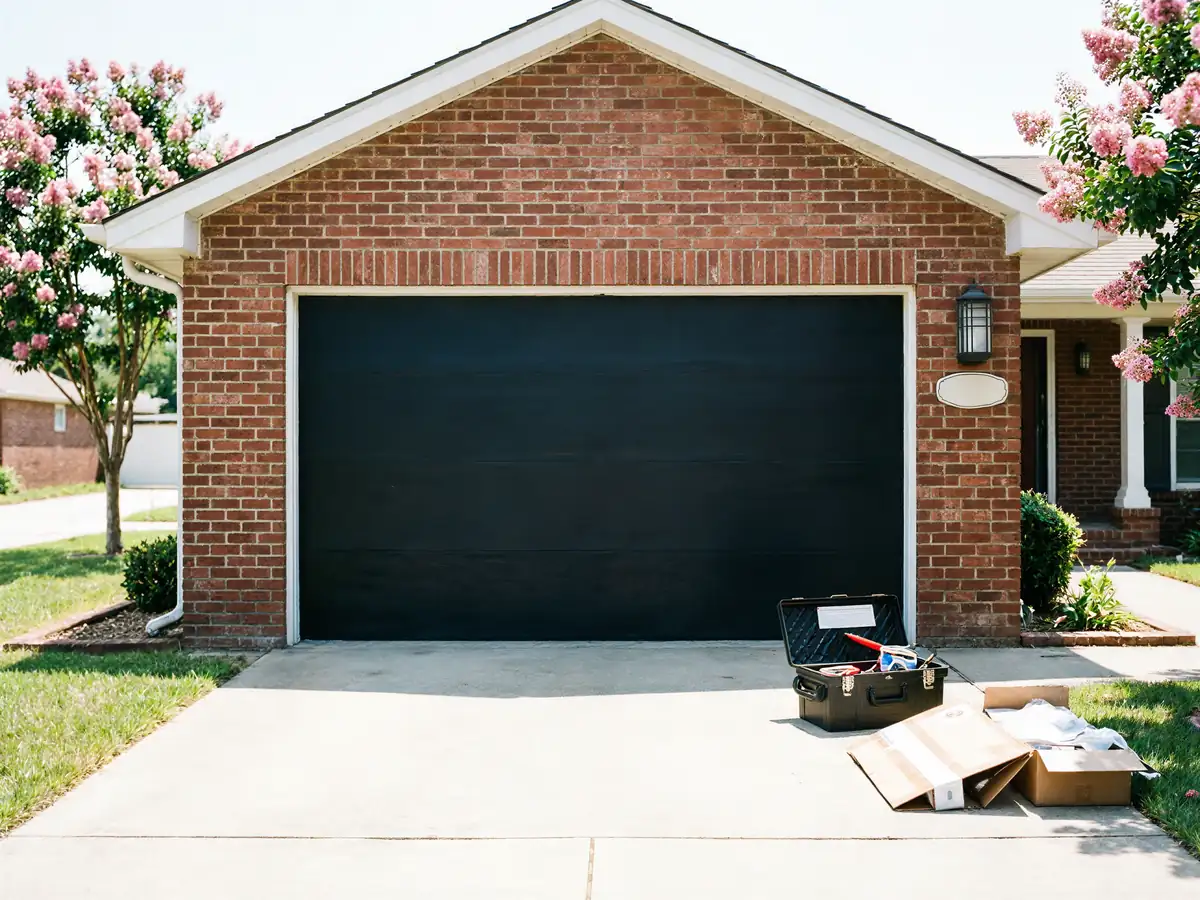
Replacing one or two panels on a door is almost always cheaper than replacing the whole door, but it's not free, and it's not always worth it either. If a door is old enough that the manufacturer has moved on to a different panel profile, matching the texture and color on a single replacement panel can be harder than it sounds - sometimes the closest match is close enough, sometimes it isn't, and that's worth discussing before we order parts.
We don't carry every panel profile on the truck
A lot of doors from the 1978-1993 construction era are no longer in production, so a panel-matching job can mean a short wait on a special order rather than a same-day fix. That's the honest limitation here: if your door is old enough and the damage is bad enough, full door replacement sometimes ends up being the more sensible call than chasing a decades-old panel style.
Across a service area with over 23,000 households and roughly 15,500 owner-occupied houses
And a median household income around $82,000, most homeowners we talk to want the repair that actually makes sense for the age of the door, not just the cheapest line item on paper.
- 23,000 households
- 15,500 owner-occupied
- $82,000 median household income
What Can Go Wrong
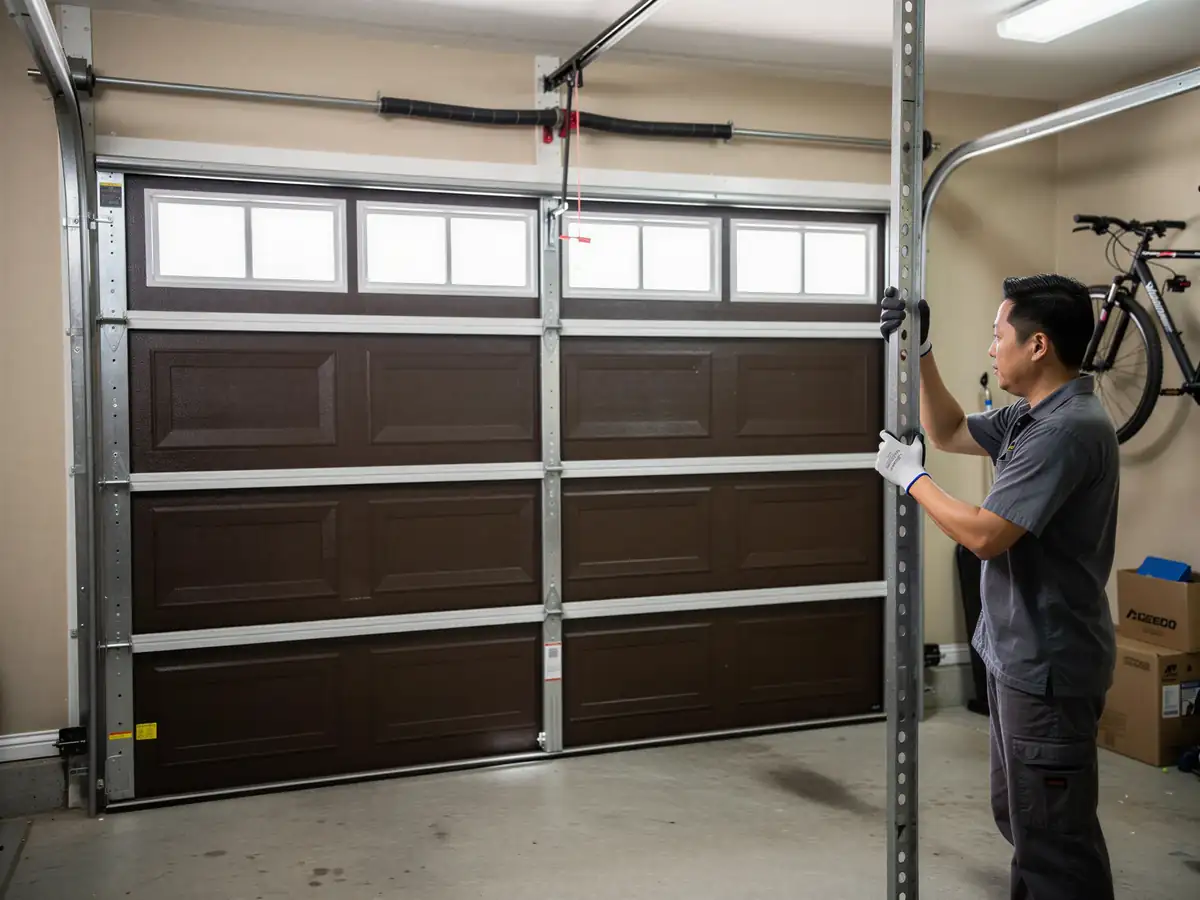
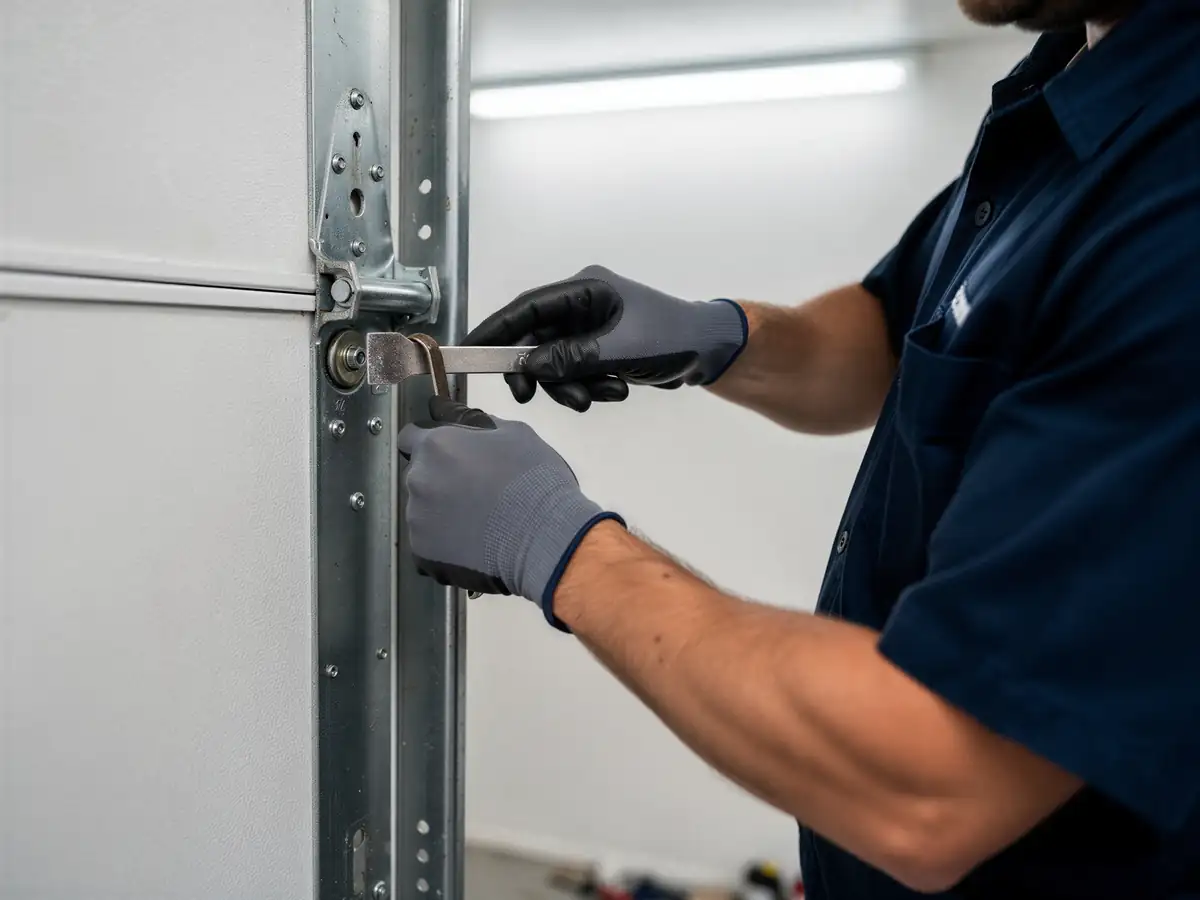
The most common mistake is replacing the panel without checking the track and rollers next to it. A dent that bad usually came with some force, and that force doesn't stop at the panel - it can tweak the track or stress the hinge brackets just enough that the new panel doesn't sit right either, and you're back to square one a few months later.
The second mistake is color and texture mismatch. On an older door, the factory finish has faded over the years, so even a correctly matched panel profile can look noticeably different until the whole door weathers evenly again. We'll tell you up front if that's likely rather than let you be surprised by it.
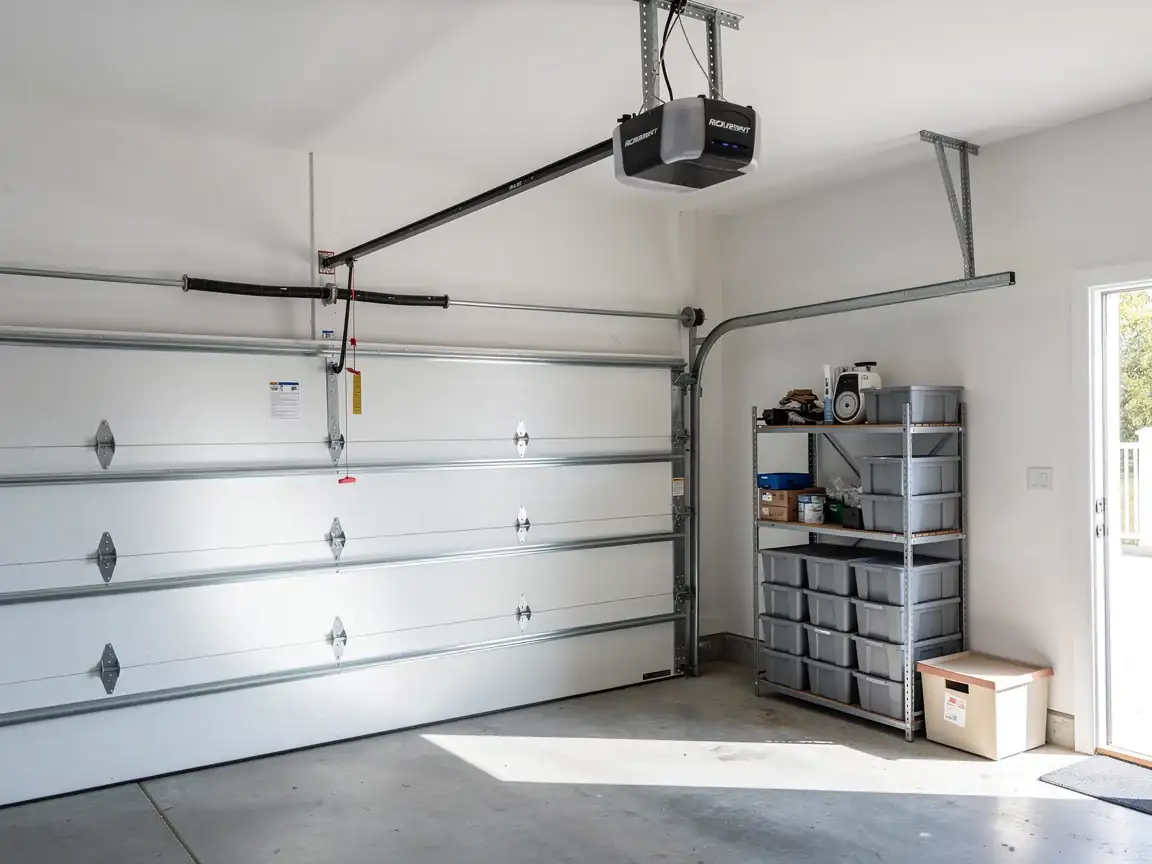
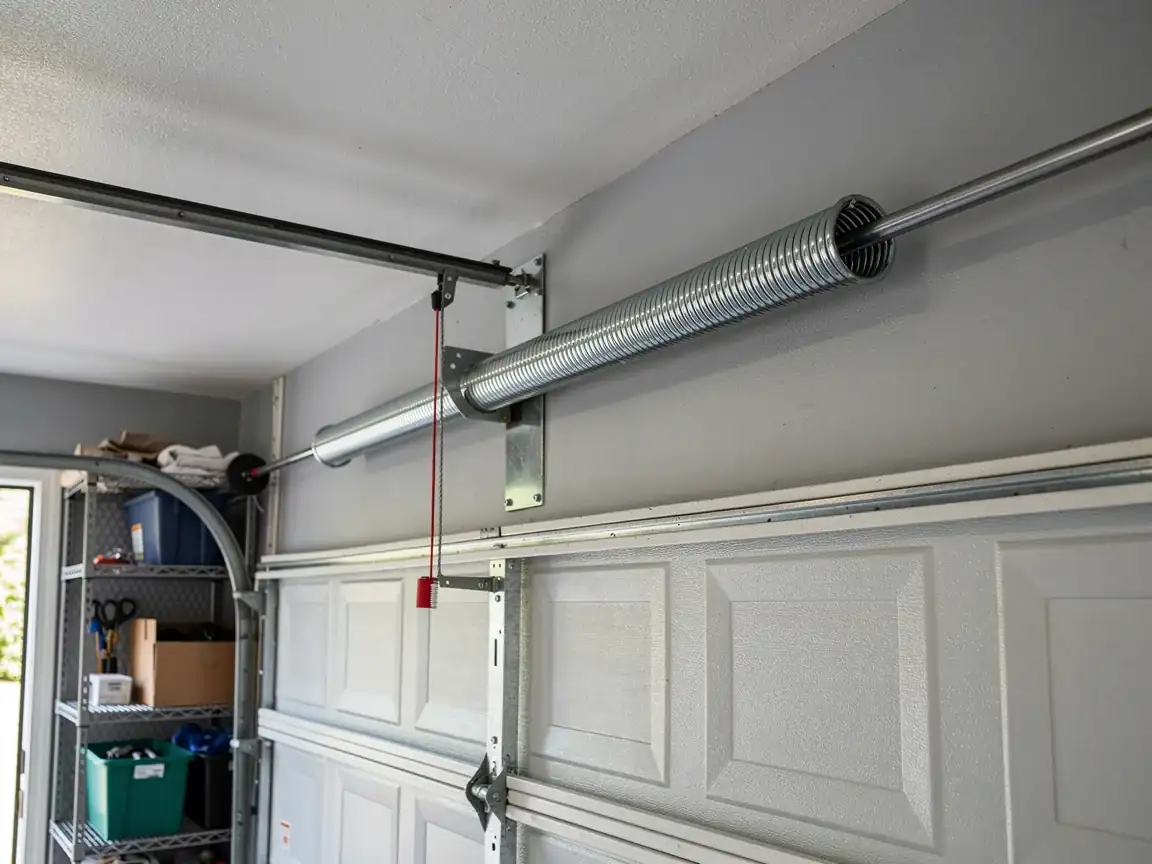
The third is skipping a proper balance check afterward. A new panel changes the weight distribution on the door slightly, and on a door running original torsion hardware from the 1978-1993 construction window, that spring was sized for the old panel's weight, not necessarily the new one. Left unchecked, that imbalance wears the opener harder than it should.