Why It Happens Here
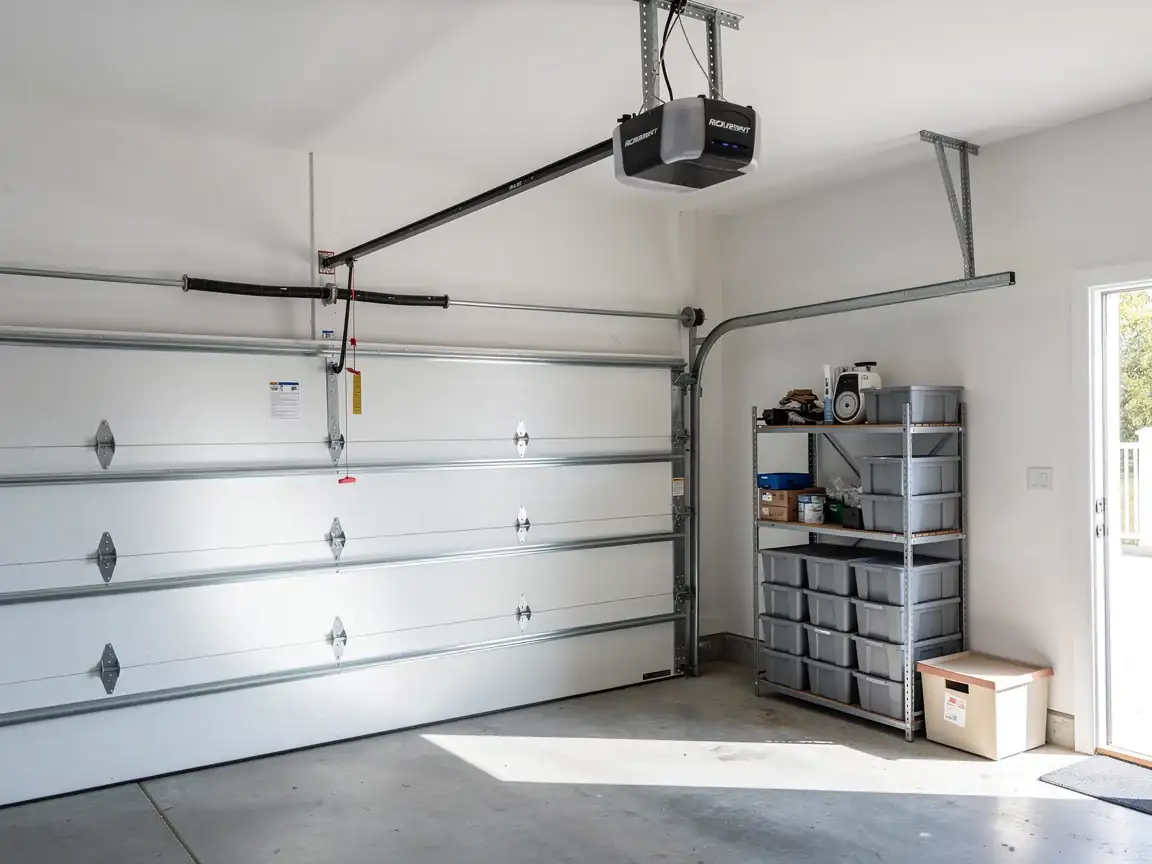
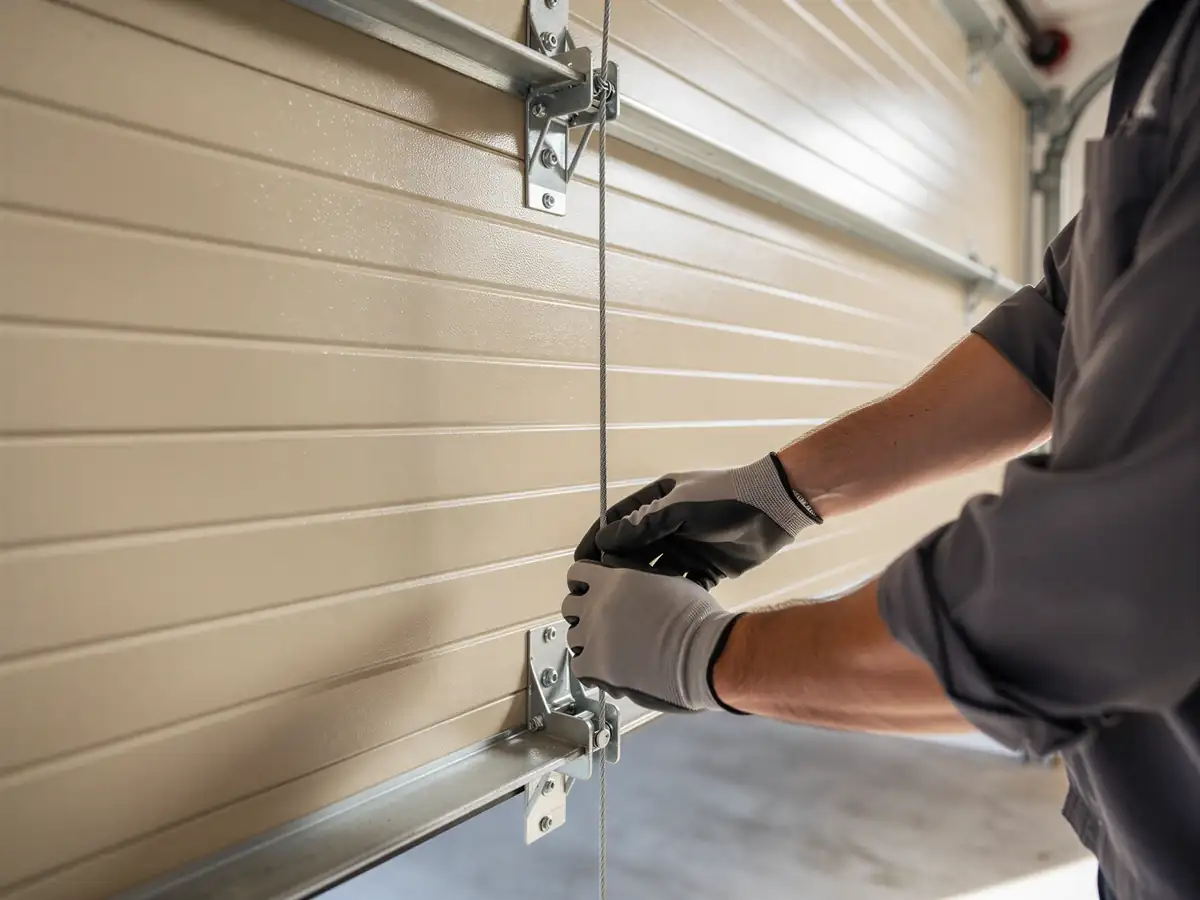
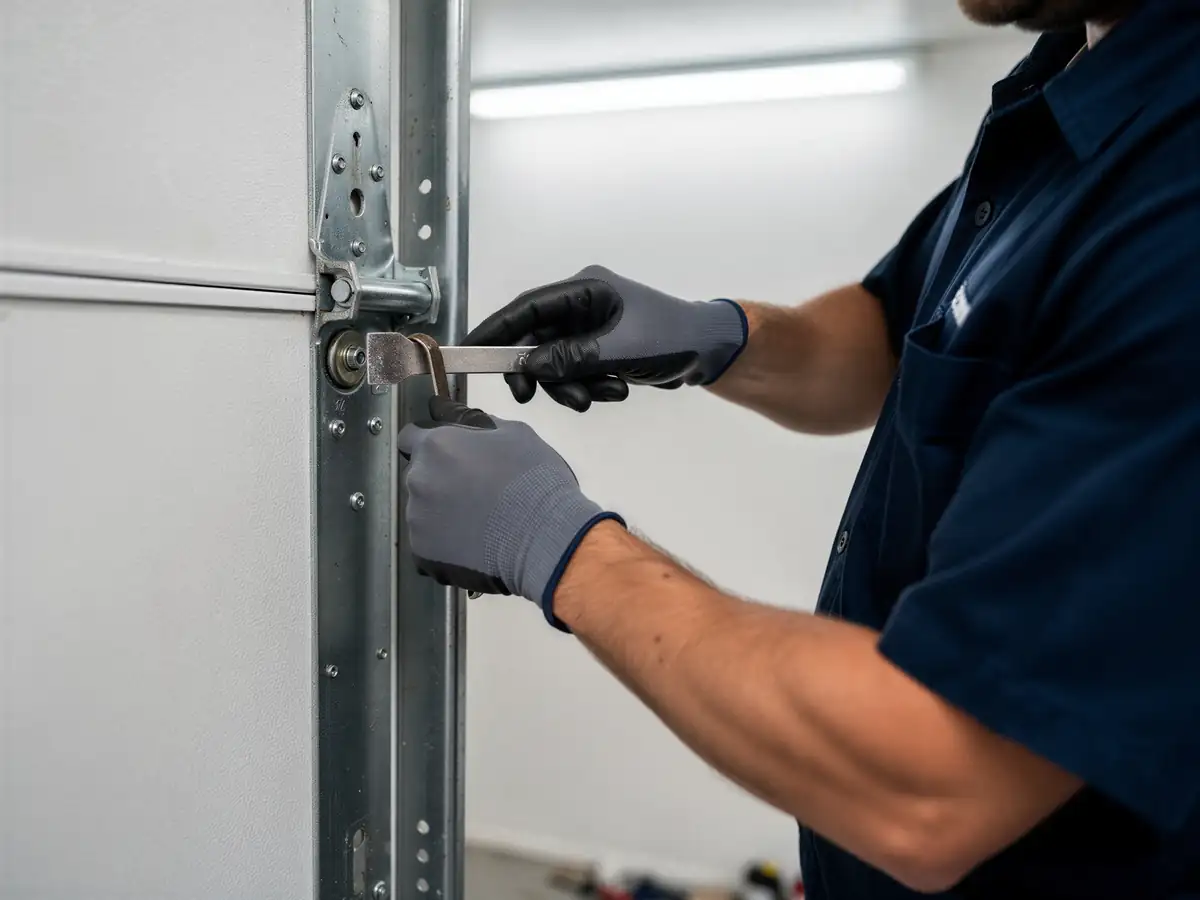
Most of the housing across this stretch of the Texas coast went up between 1978 and 1993, with the median build year landing around 1984. That means a lot of garage doors out there are still running on the original track and roller hardware those houses shipped with - steel track brackets, galvanized rollers, the works, all pushing toward or past the forty-year mark. Track brackets that old loosen in the wall stud over decades of door cycles, and once a bracket backs out even an eighth of an inch, the door starts riding the rail wrong instead of straight through it. Across the five main pockets of 1980s and 90s stock that make up most of this service area, it's the same story: original hardware, aging fasteners, doors that drift off the rail a little more every season. The mild temperate climate here doesn't put the kind of extreme heat or freeze cycling on a track that causes dramatic warping, so when we show up on an off-track call in a house this age, it's almost never the metal itself that failed - it's the mounting it rode on for thirty-plus years finally giving up a fraction of an inch at a time.
The Symptom
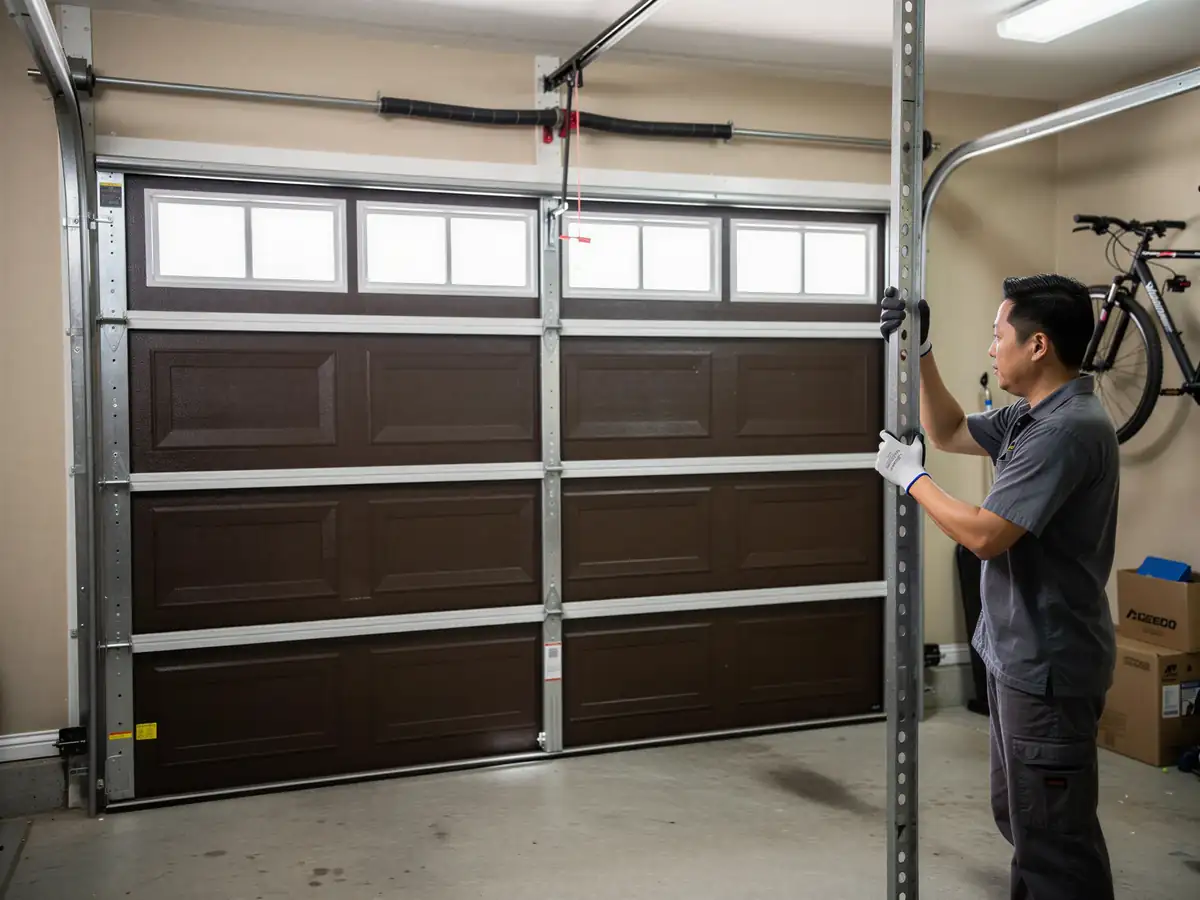
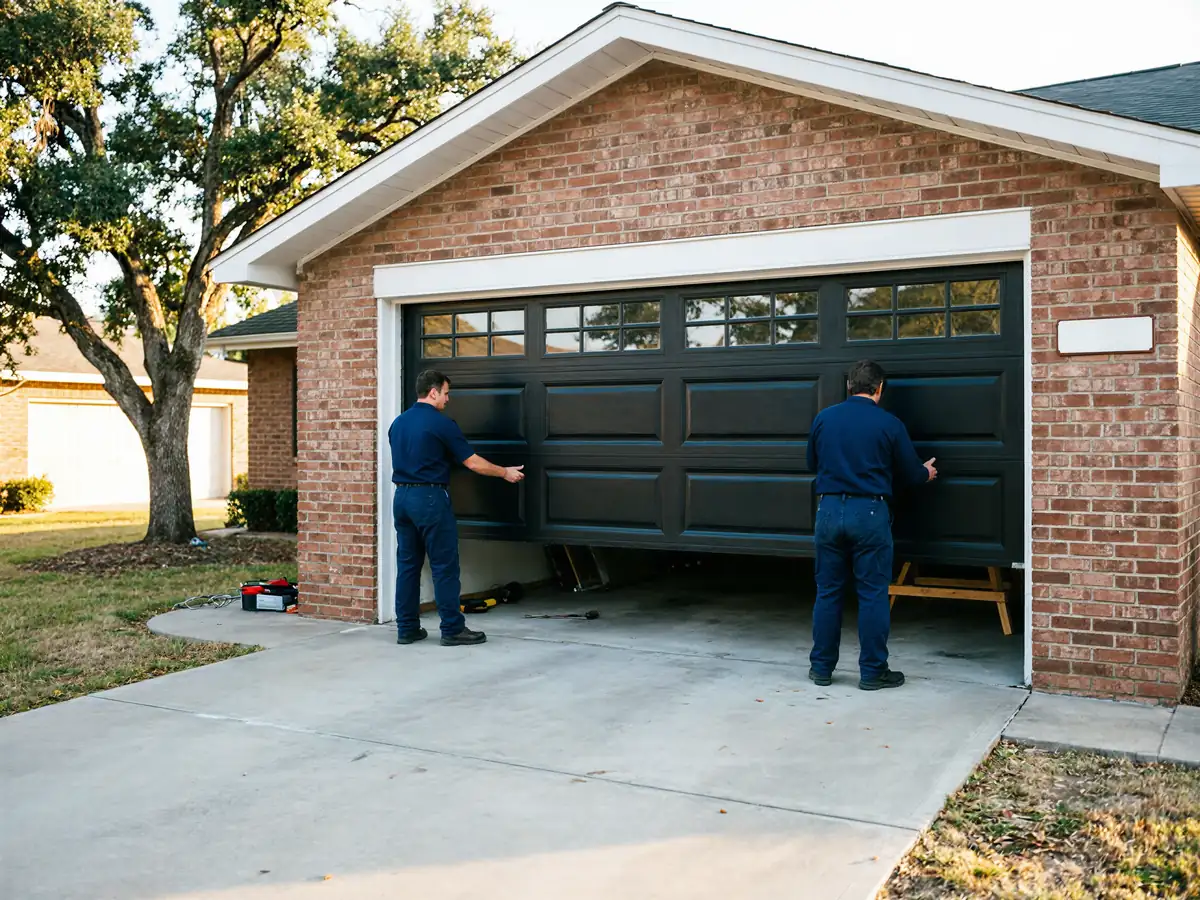
You'll usually notice it before you ever look at the track. The door hangs crooked in the opening, one bottom corner sitting lower than the other, or it catches hard partway up and stalls. Sometimes a roller pops clean out of the rail and you can see daylight between the wheel and the steel. Other times the door still moves but makes a grinding or scraping sound low on one side as a roller rides the edge of the track instead of the channel. On a double-wide door, off-track usually shows up at one end first, since the hardware on each side wears independently - you'll see the door rack sideways, square on one end and tipped on the other. If the opener is still trying to pull a door that's riding the rail wrong, you'll sometimes hear the motor strain through its full cycle without the door ever opening cleanly. None of that is something to run through a few more times to see if it clears up. A door off its track can jump the rail entirely on the next cycle, and at that point it's not a roller anymore - it's a panel coming down.
What Can Go Wrong
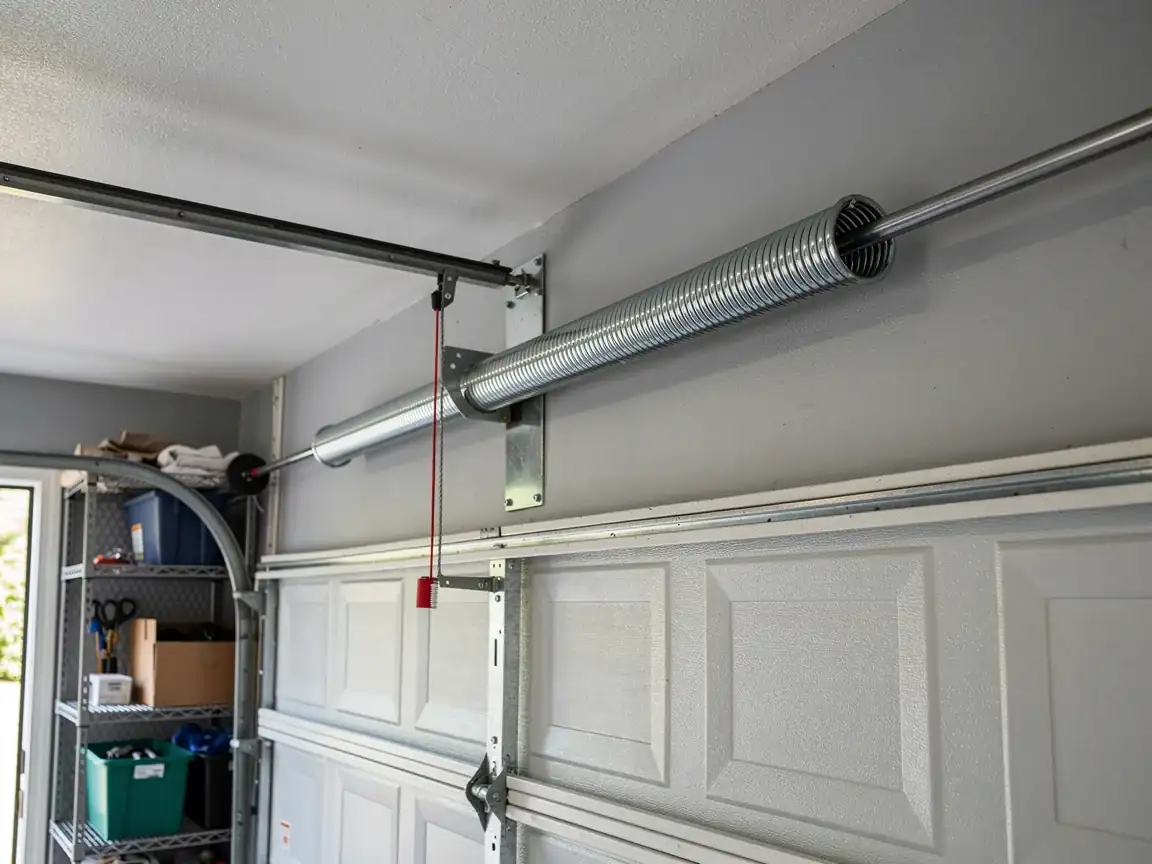
Leave a door running off track and the next failure isn't gentle. A cable can jump its drum when the door racks sideways, and a cable under tension that comes off a drum will whip. If one side of the door is riding low on a popped roller, the opener often keeps pulling anyway, which loads the opposite track and bracket well past what they're built for - that's how you turn a one-side roller job into a two-side track replacement. On older torsion systems original to houses built in the 1978 to 1993 window, the spring itself can take sideways load it was never engineered to carry, and a spring failing under an off-track door is a different and more dangerous call than a spring failing on a door that's hanging straight. There's also the panel itself: once a corner catches on a bent track edge repeatedly, the panel seam stretches, and a seam that's stretched doesn't go back whether you fix the track or not. None of this needs to be dramatic to be real - most off-track calls we get are still simple roller-and-bracket jobs. But every week a crooked door keeps running is a week closer to the harder, more expensive version of the same call.