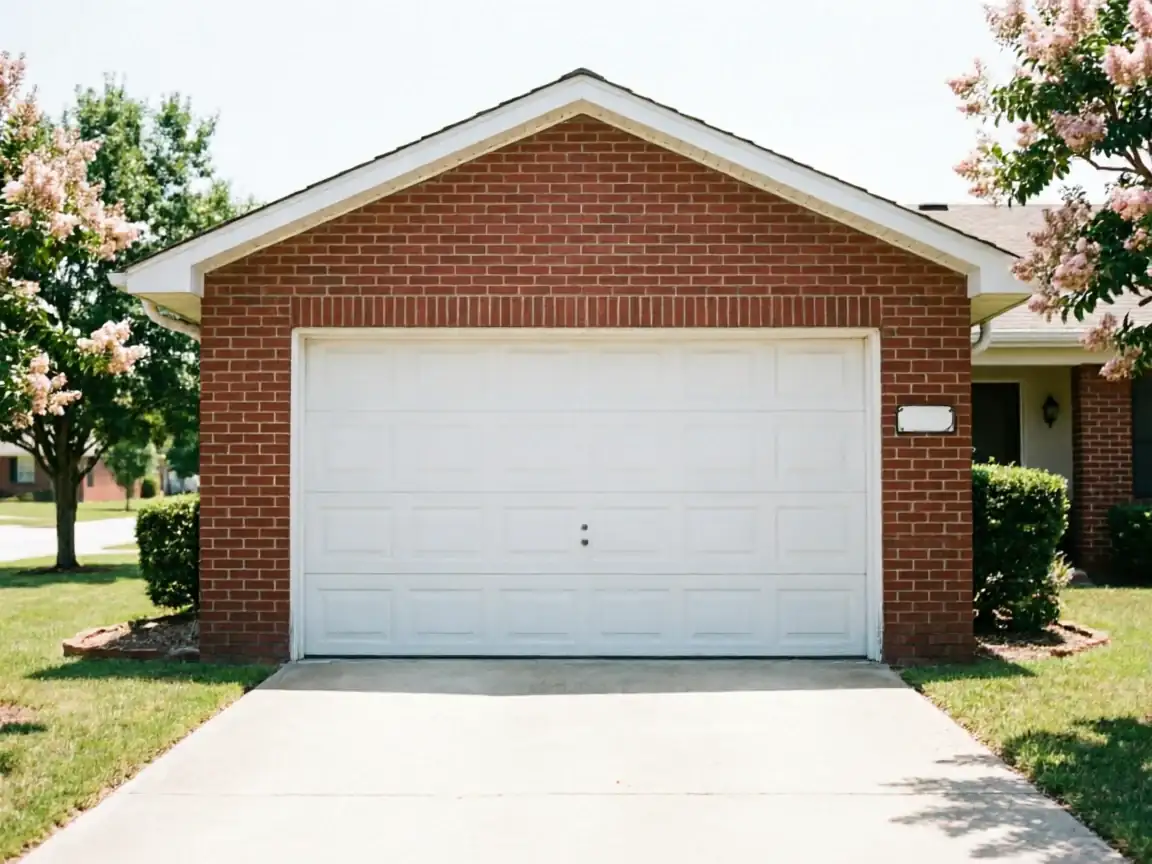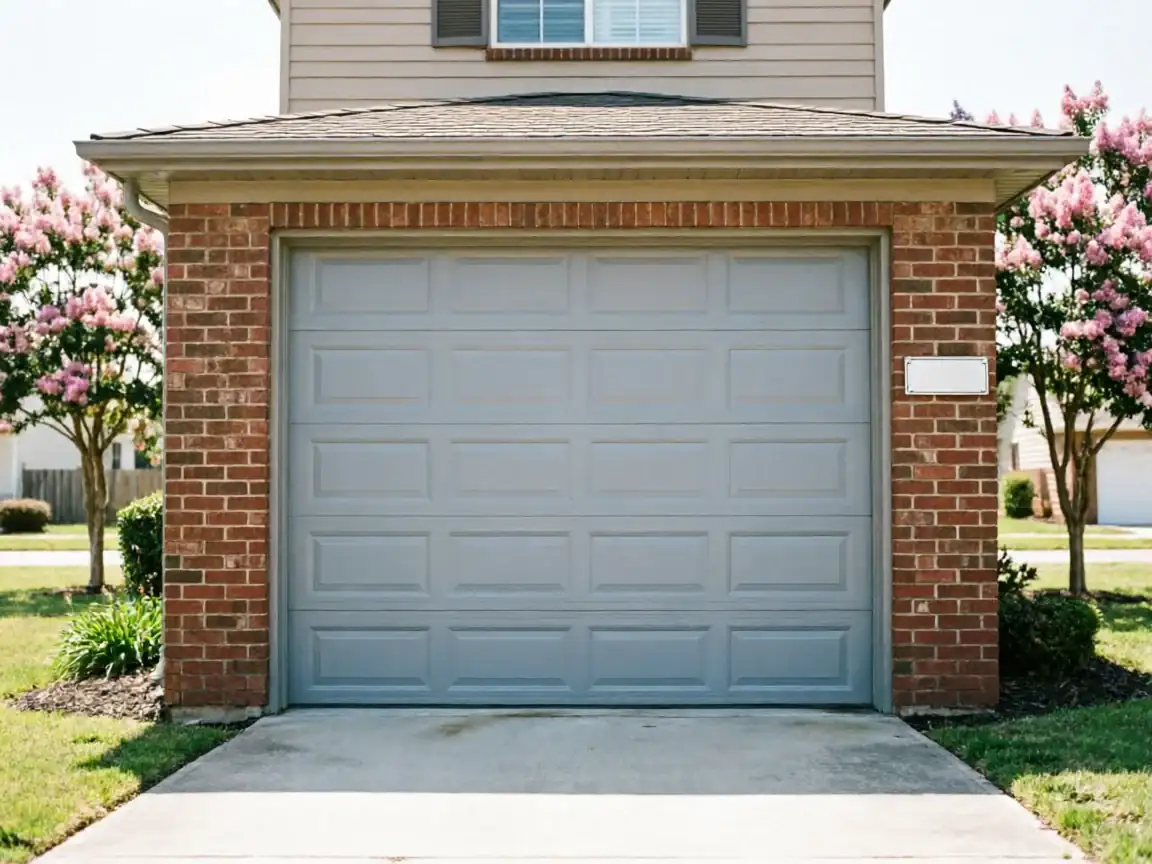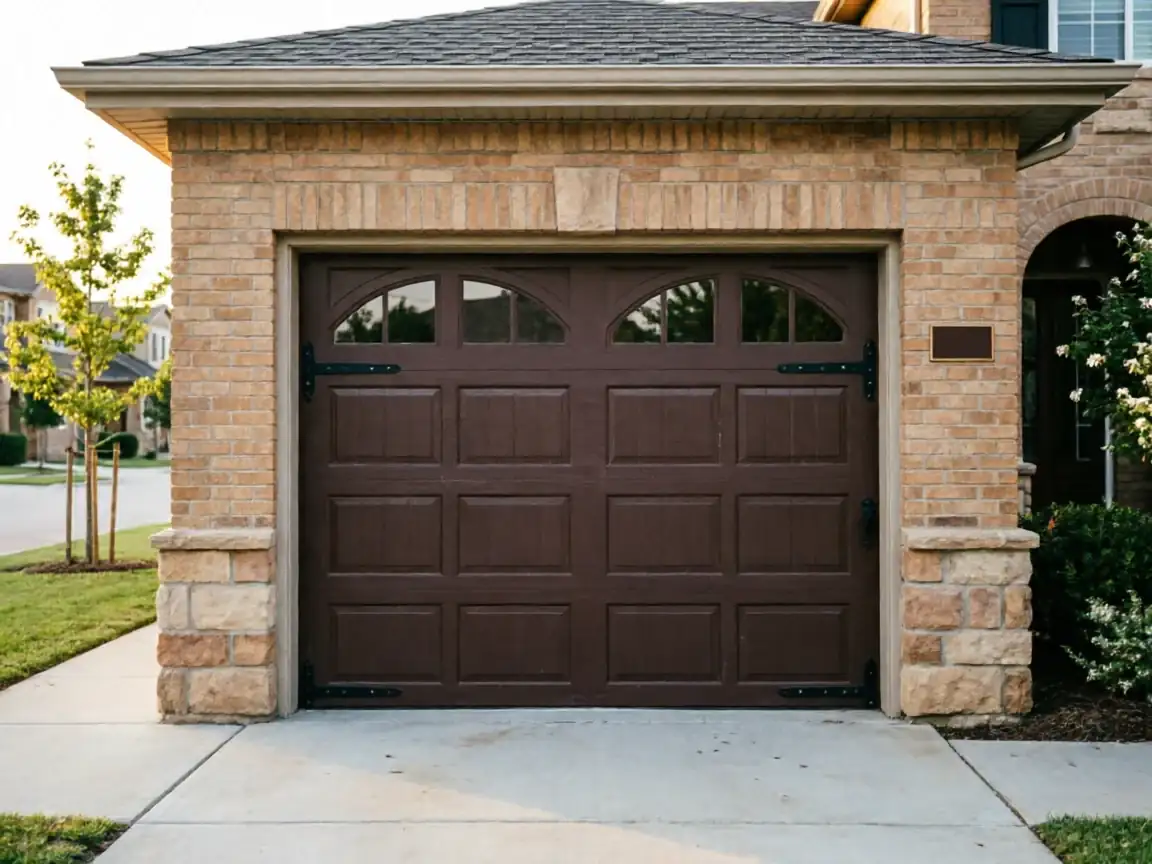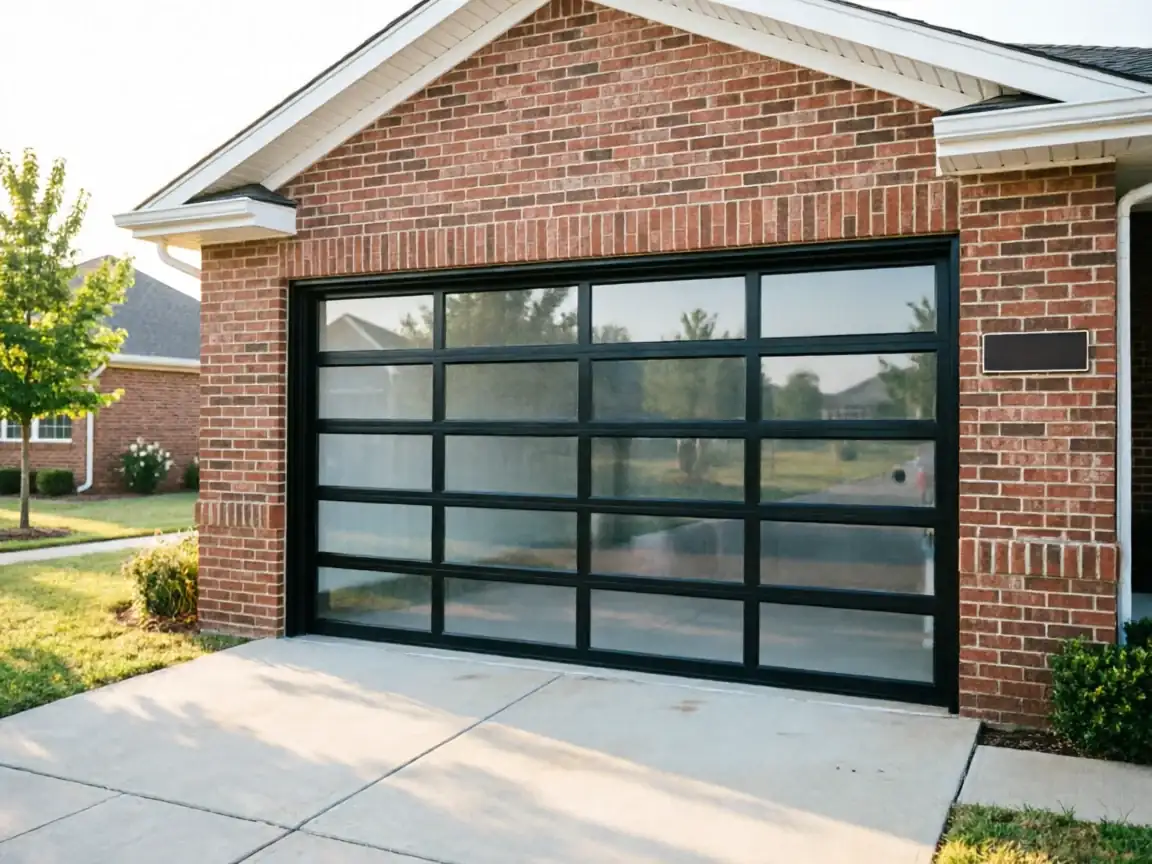
How We Fix It
When a door jumps track in a house built around 1991, the first thing we check isn't the track itself - it's whether the rollers and hinges are the originals. A lot of them are. In a house that age, the door has usually gone up and down somewhere between fifteen and twenty thousand times, and steel rollers on steel track wear a groove that eventually lets the roller walk sideways under the smallest misalignment - a slammed door, a bumped car, a cable that's stretched a quarter inch more than its neighbor.
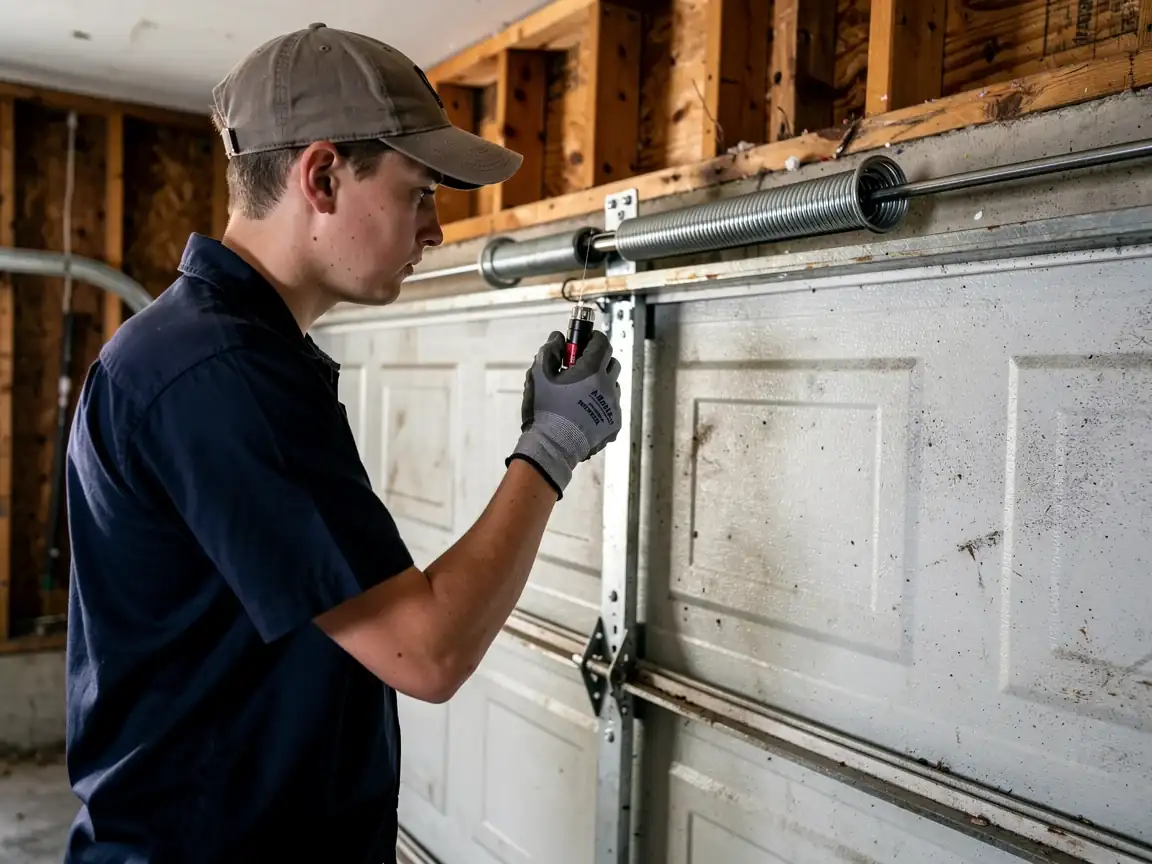
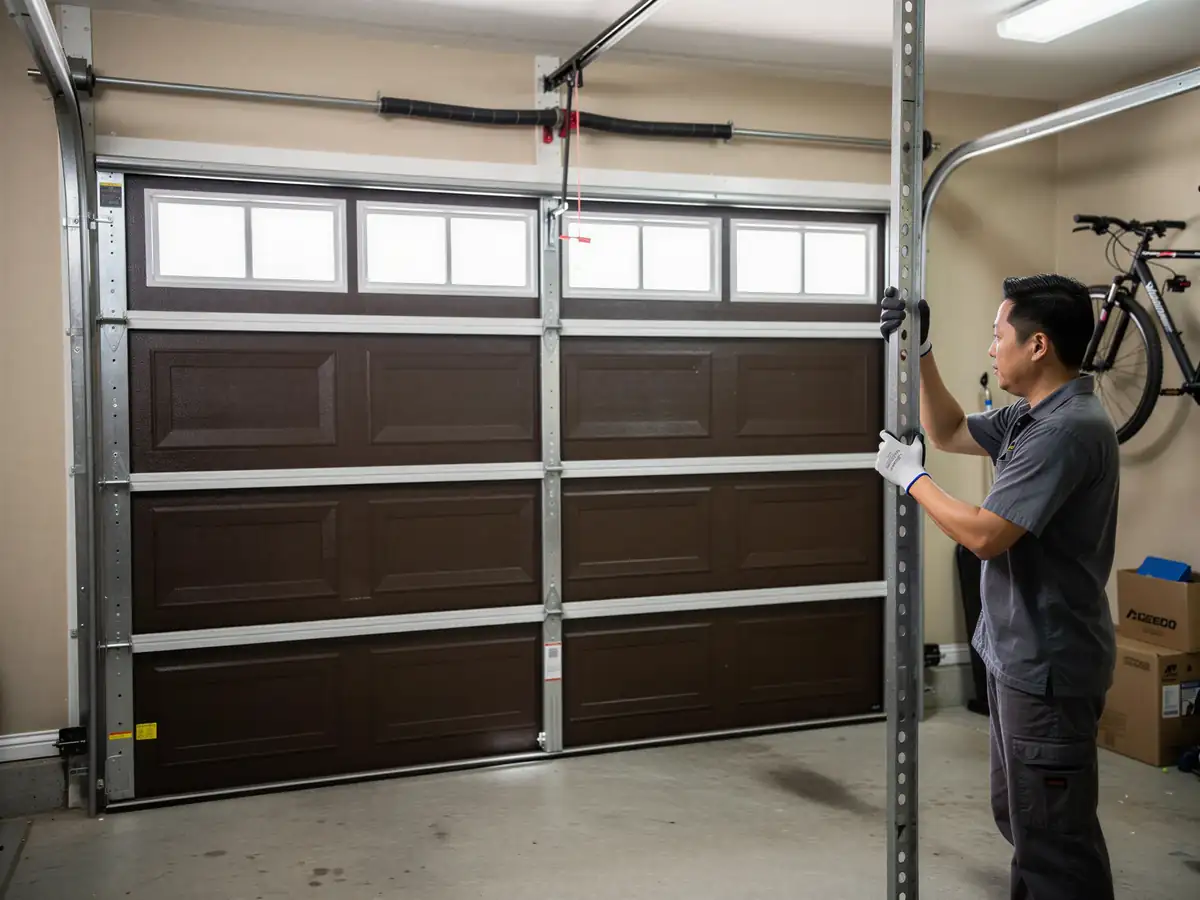
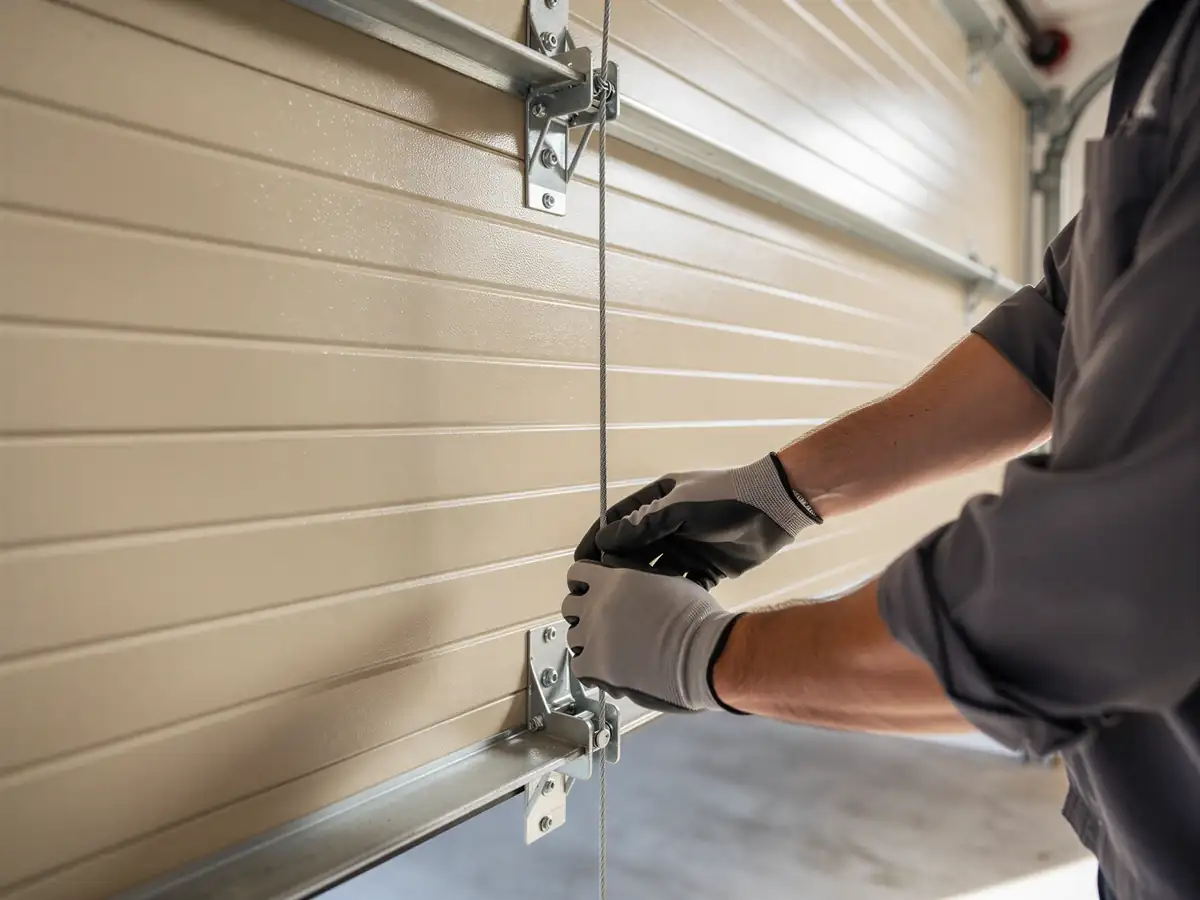
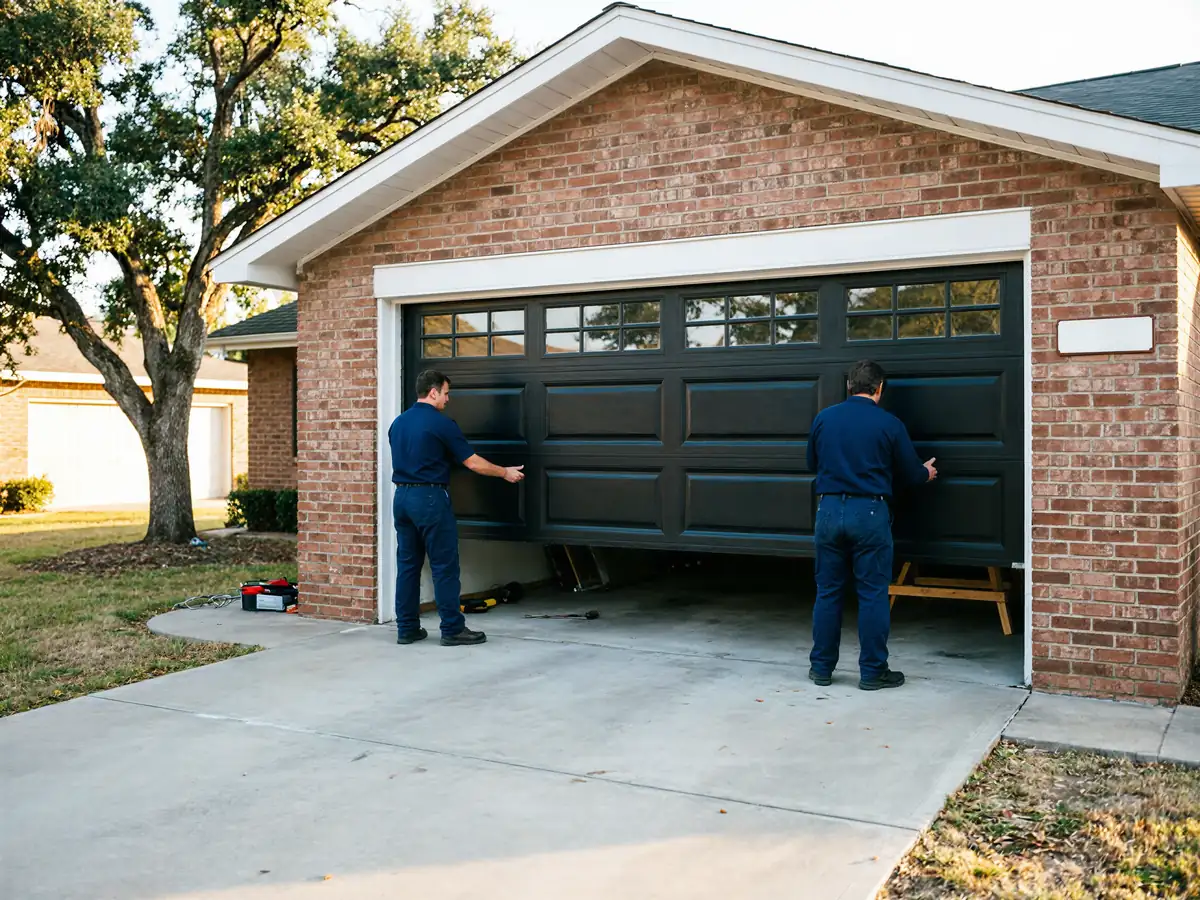
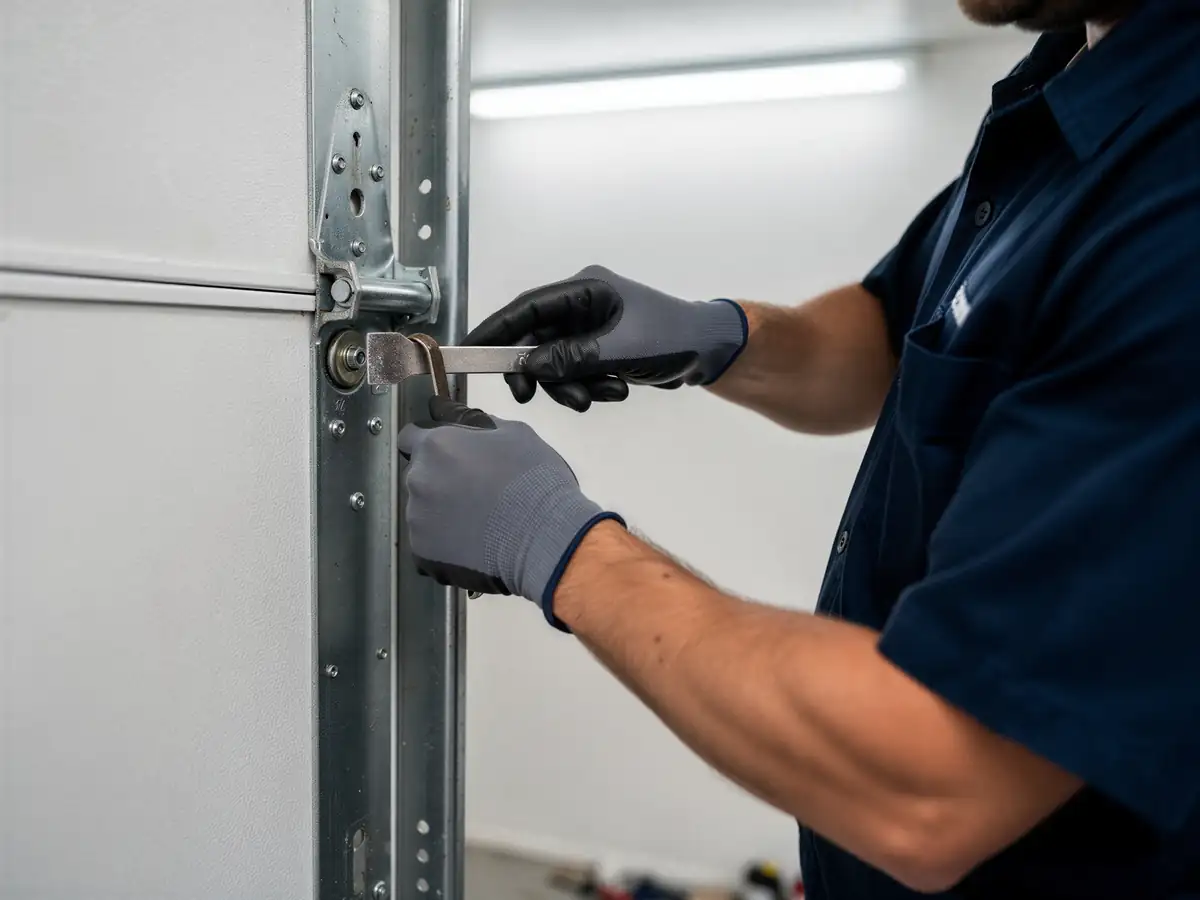
The fix starts with pulling the door off the track safely, which on a double door means clamping it so it can't drop while the cables are slack. Then we check the track for bent flanges, square it back to the wall brackets, and look at the rollers one at a time. If they're original nylon-and-steel from the build era, we're usually replacing the full roller set rather than the one or two that look worst - the rest are close behind.
The part we won't do: force a bent track back into shape and call it done if the bracket behind it has pulled loose from the framing. That's a patch, not a repair, and it comes back off track within a season.
Why It Happens Here
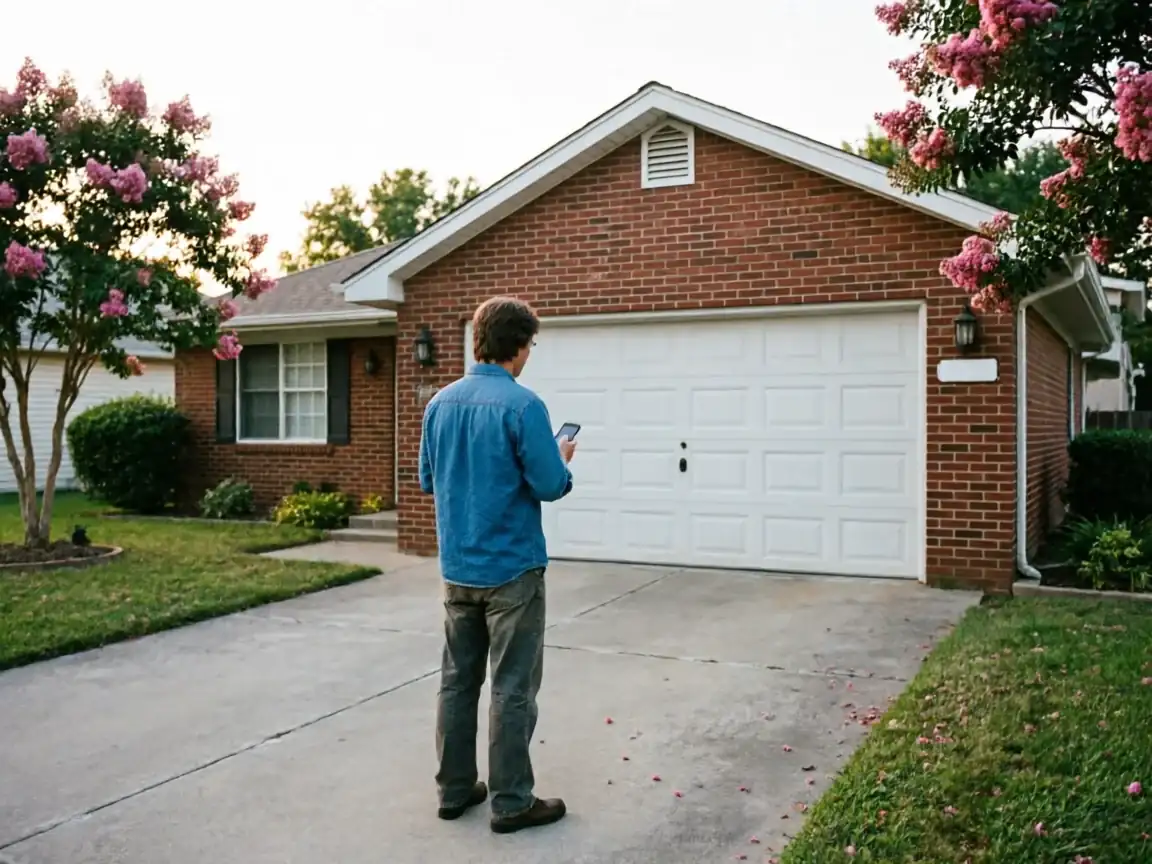
Santa Fe's housing stock centers on 1991, which puts most garage doors and their hardware at thirty-plus years old if nothing's been swapped out. That's long enough for steel track to develop wear at the curve where it meets the horizontal rail - the exact spot where off-track problems start, because that's where the roller takes the sharpest load change on every open and close.
The area sits in a mild temperate band, so we're not dealing with freeze-thaw cycles that crack brackets or warp wood jambs the way colder climates do. That's a point in this area's favor - the hardware here fails from age and cycle count, not from weather stress. It means when a door comes off track in Santa Fe, the cause is almost always mechanical wear rather than a seasonal event, which also means it's predictable and usually visible once you know where to look.
The Cost of This Job
An off-track call runs differently depending on what's actually worn versus what's just knocked loose
If the track bent from an impact and the rollers are otherwise sound, that's a track-and-bracket job. If the rollers are original to a 1991-era door, as a lot of them are in this area, you're looking at a full roller replacement alongside the track work, because replacing one worn roller next to nine others the same age just means a second call next year.
We don't carry a universal price here because the two jobs aren't the same job
What we can tell you is which one you've got once we've had the door open - and we'll show you the worn roller or the bent flange before we quote anything, so you're not taking our word for it.
How Long You Are Without the Door
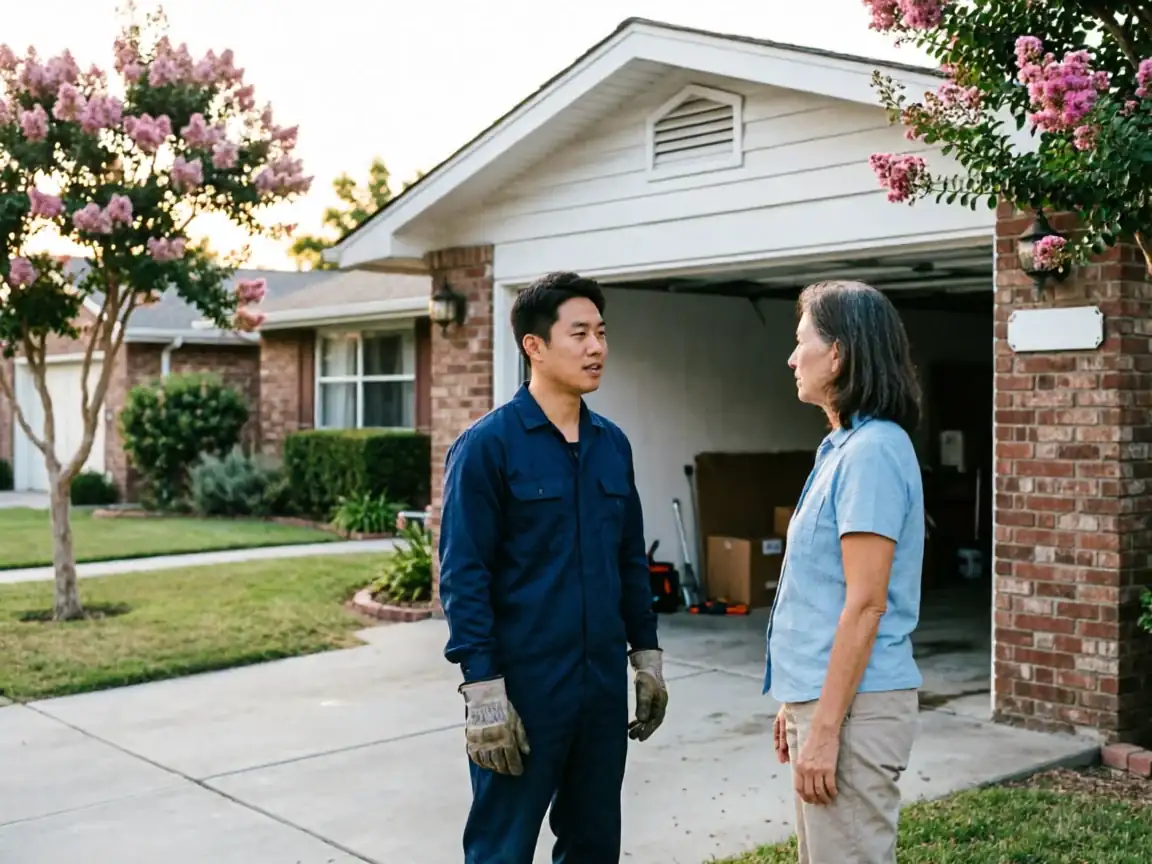
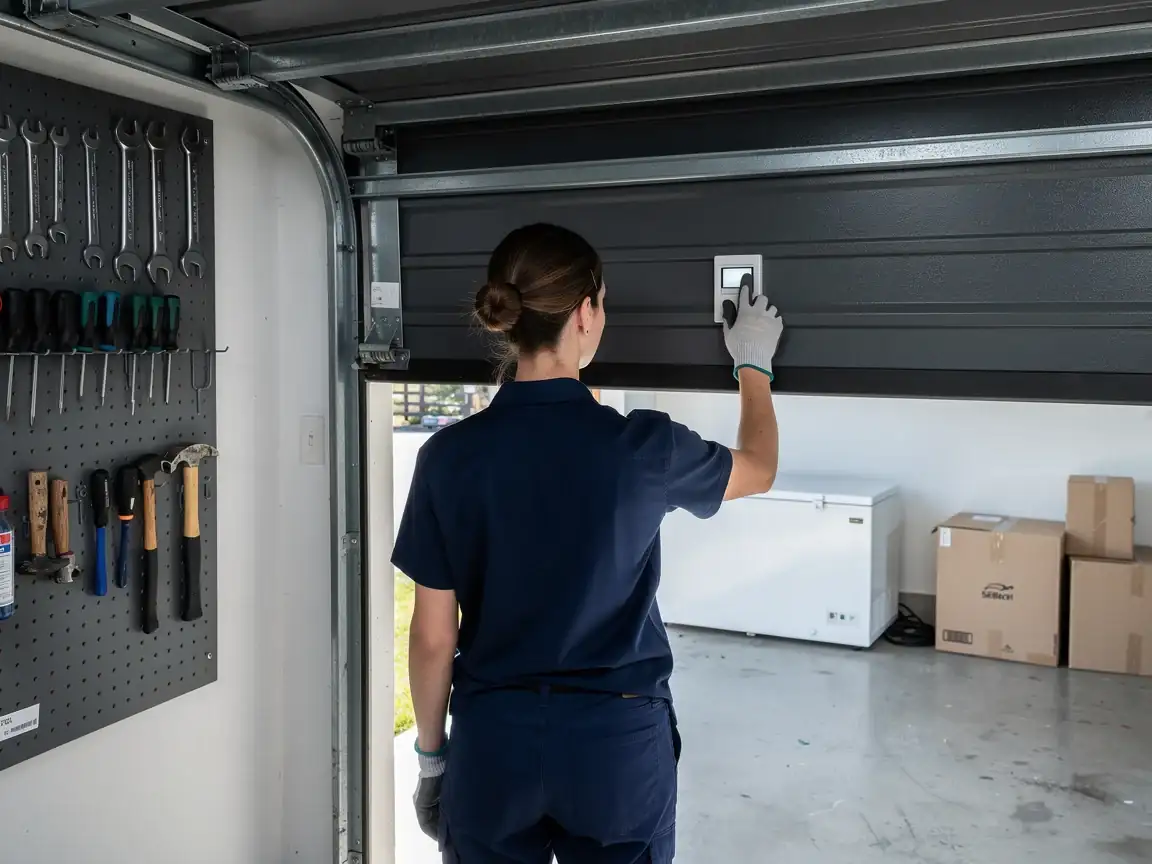
We come from Galveston, about 16 miles out, so factor that drive into when we can get there - it's not a same-block callout. Once we're on site, a standard off-track repair with a track reset and roller swap is usually a same-visit job; the door goes back on its track and gets tested the same day we arrive.
Where it takes longer: if the bracket has pulled away from the framing, or if the spring itself was damaged when the door came off track - which happens more than people expect, since a door off one side can bind the spring under uneven tension. If a part isn't on the truck, that becomes a return trip, and we'll tell you straight if that's where your job is headed rather than guessing out loud.