Why It Happens Here
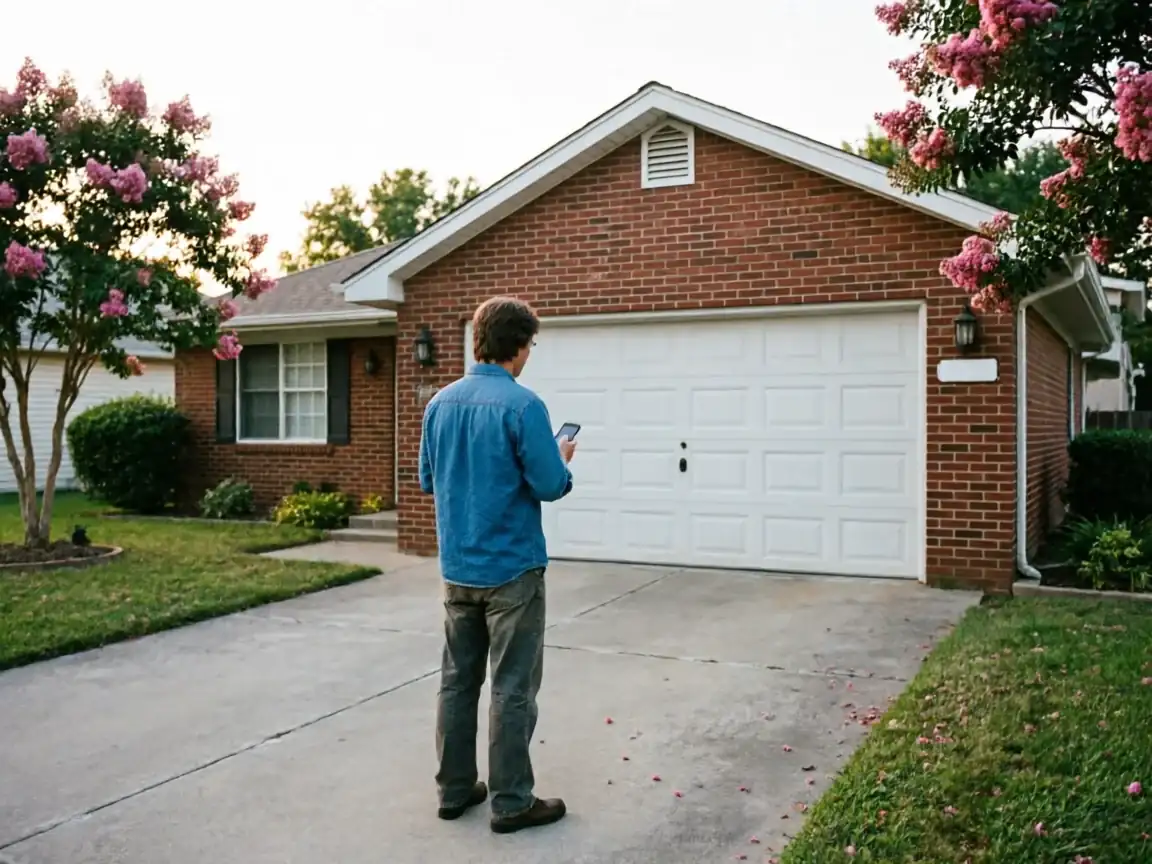
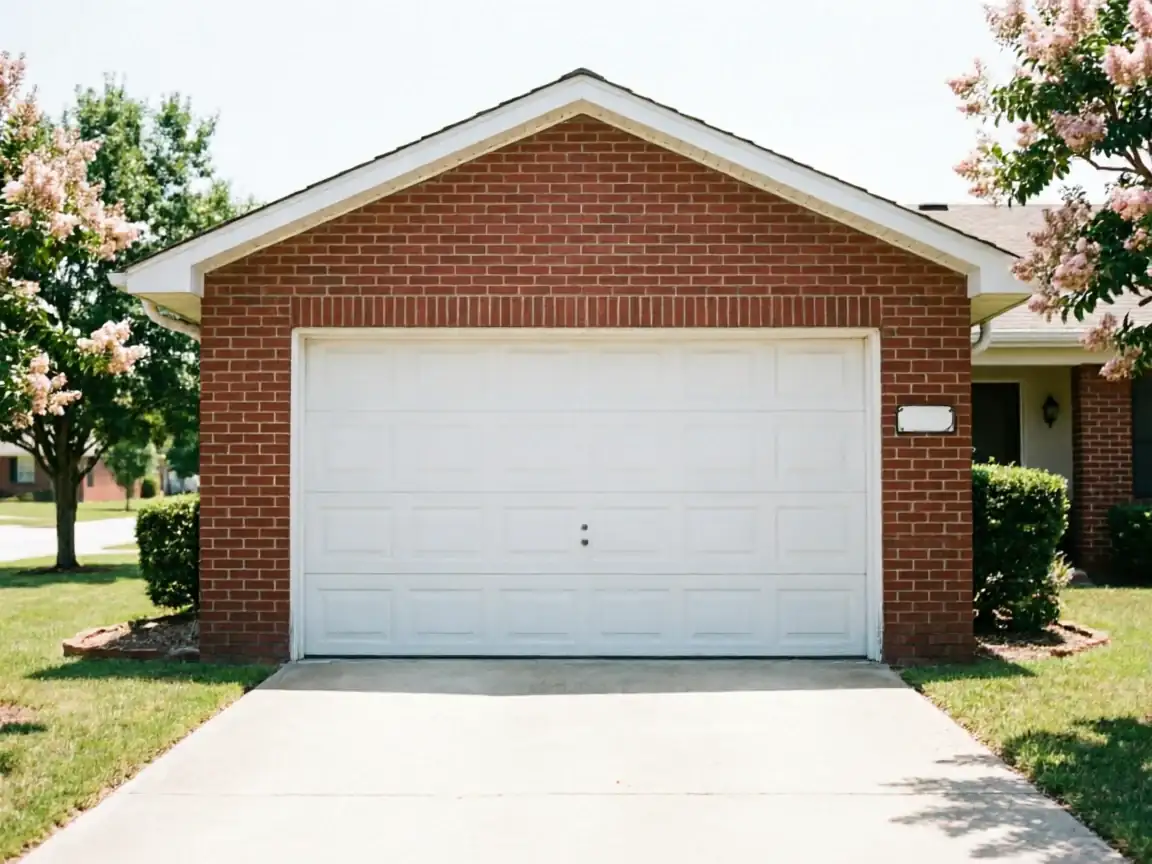
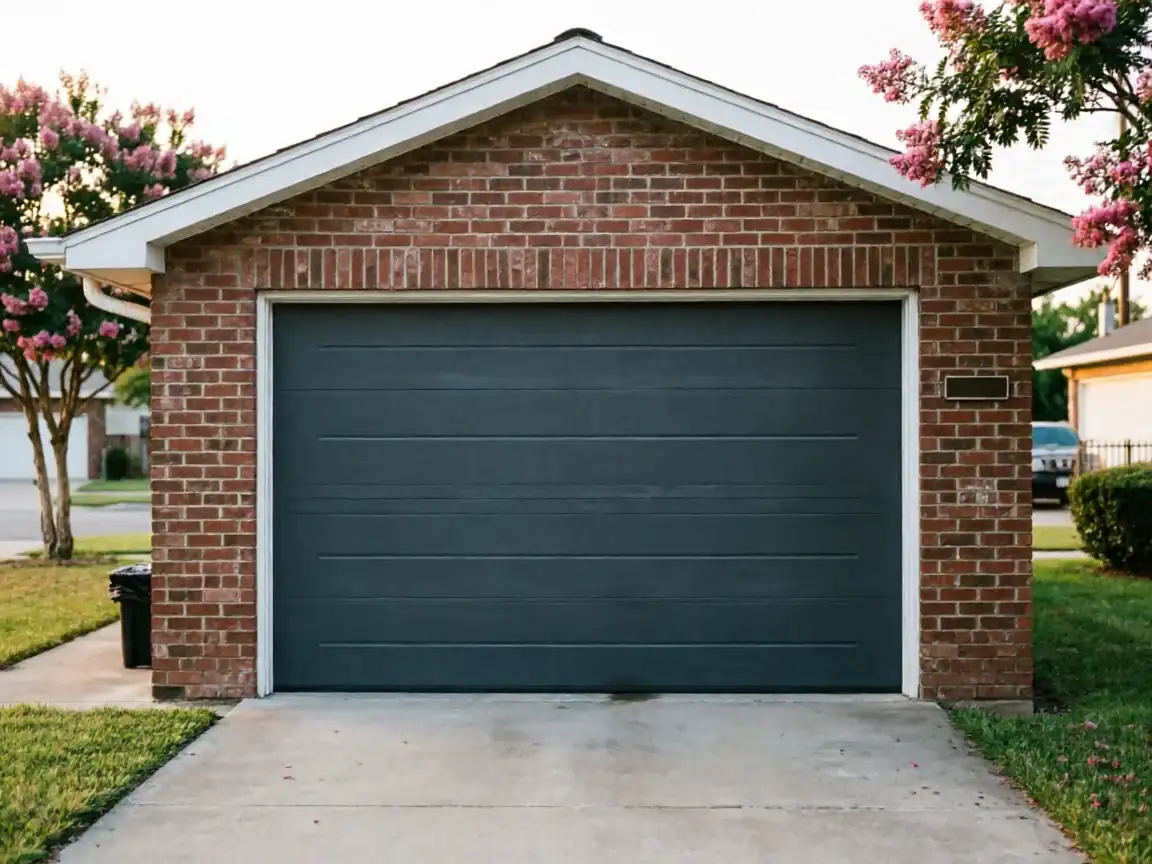
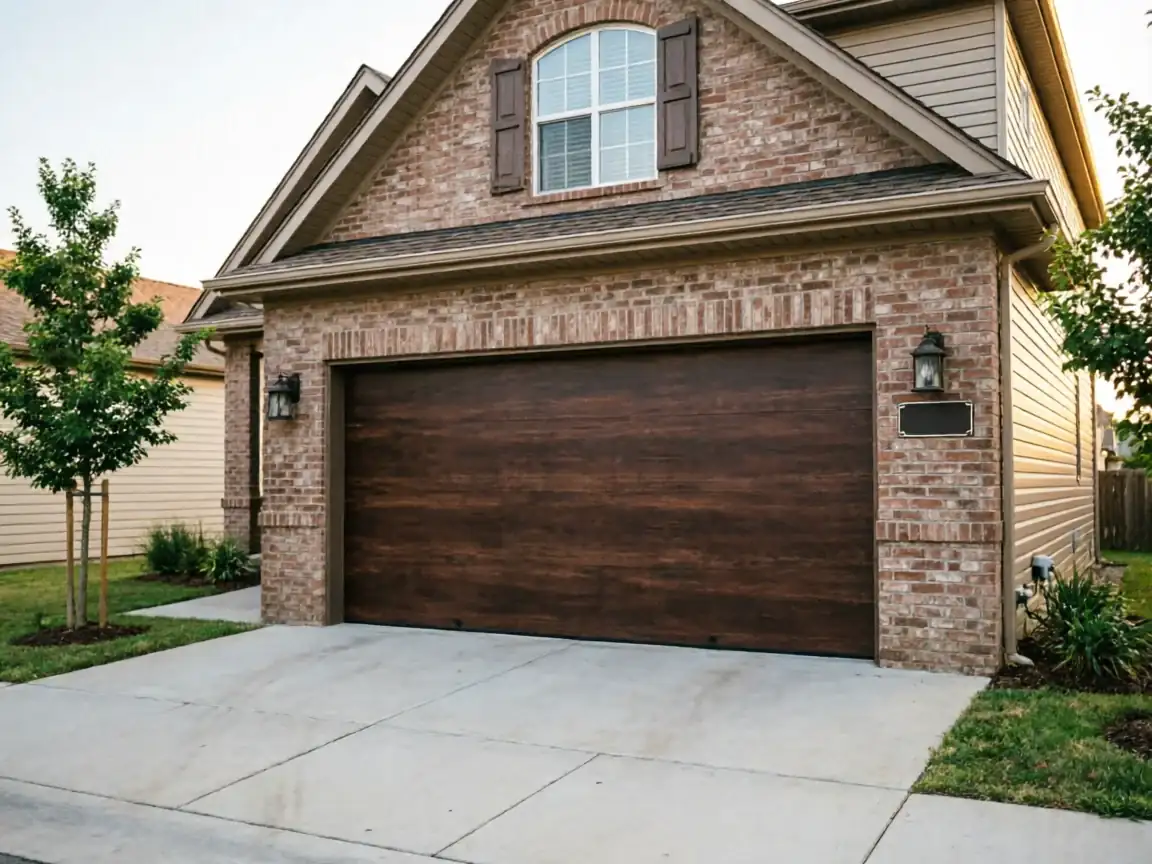
Most houses in Hitchcock went up around 1983, which puts this area squarely in the same build window as the rest of the county's 1978-1993 stock. That matters for cables because a door from that era has had roughly four decades to wear through its original lift cables, and in a lot of houses here, nobody has touched them. If the opener still runs and the door still looks fine, homeowners assume the cable is fine too - until a strand frays through and the door drops crooked on one side.
The climate here is mild temperate, so we're not dealing with the deep freeze-thaw cycling that snaps cables up north. The failure mode here is slower: galvanized coating wearing thin, rust creeping in where the cable wraps the drum, and strands going one at a time until the last one gives. A cable that's been sitting on a 1983 drum for forty years isn't a maybe - it's a when.
Because the company runs out of Galveston, about 7 miles away, a cable call out here isn't a same-block job the way it might be for a Galveston address. We still take the call, we just don't pretend there's a depot on this side of the bay.
What Is on the Truck
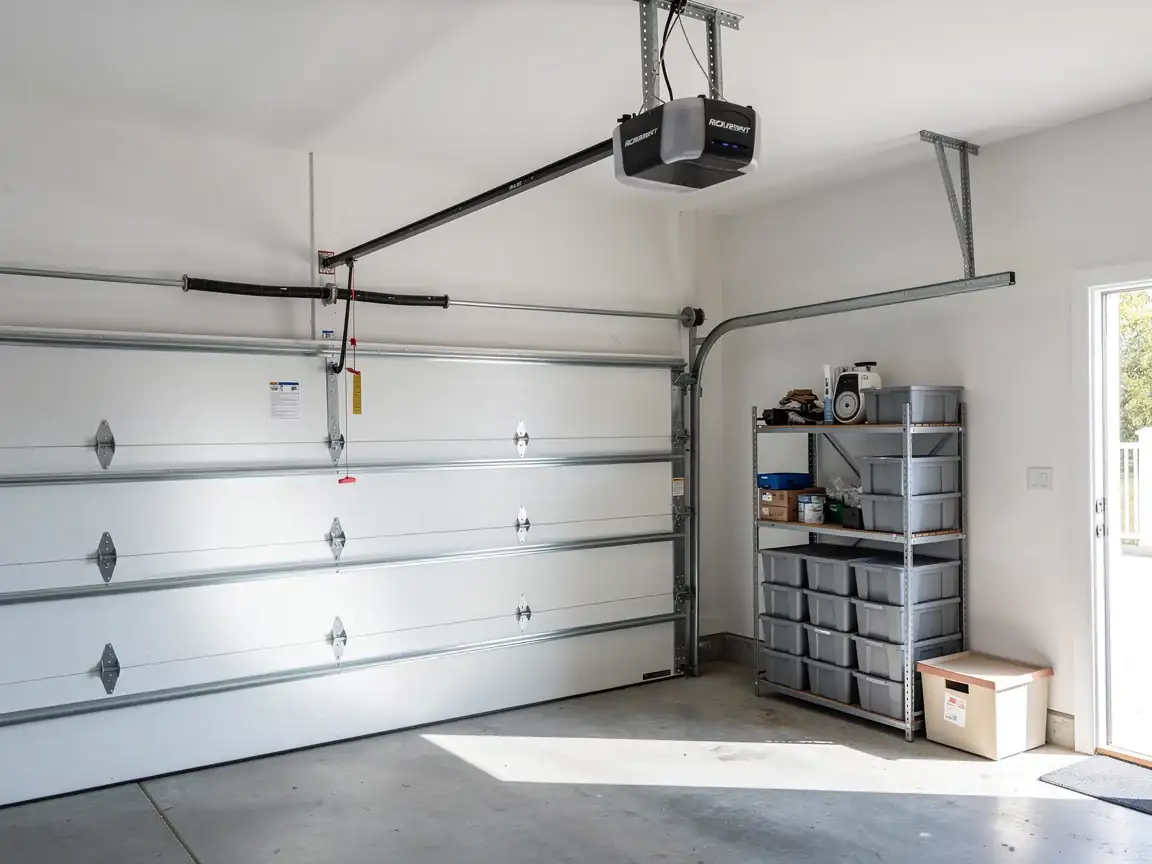
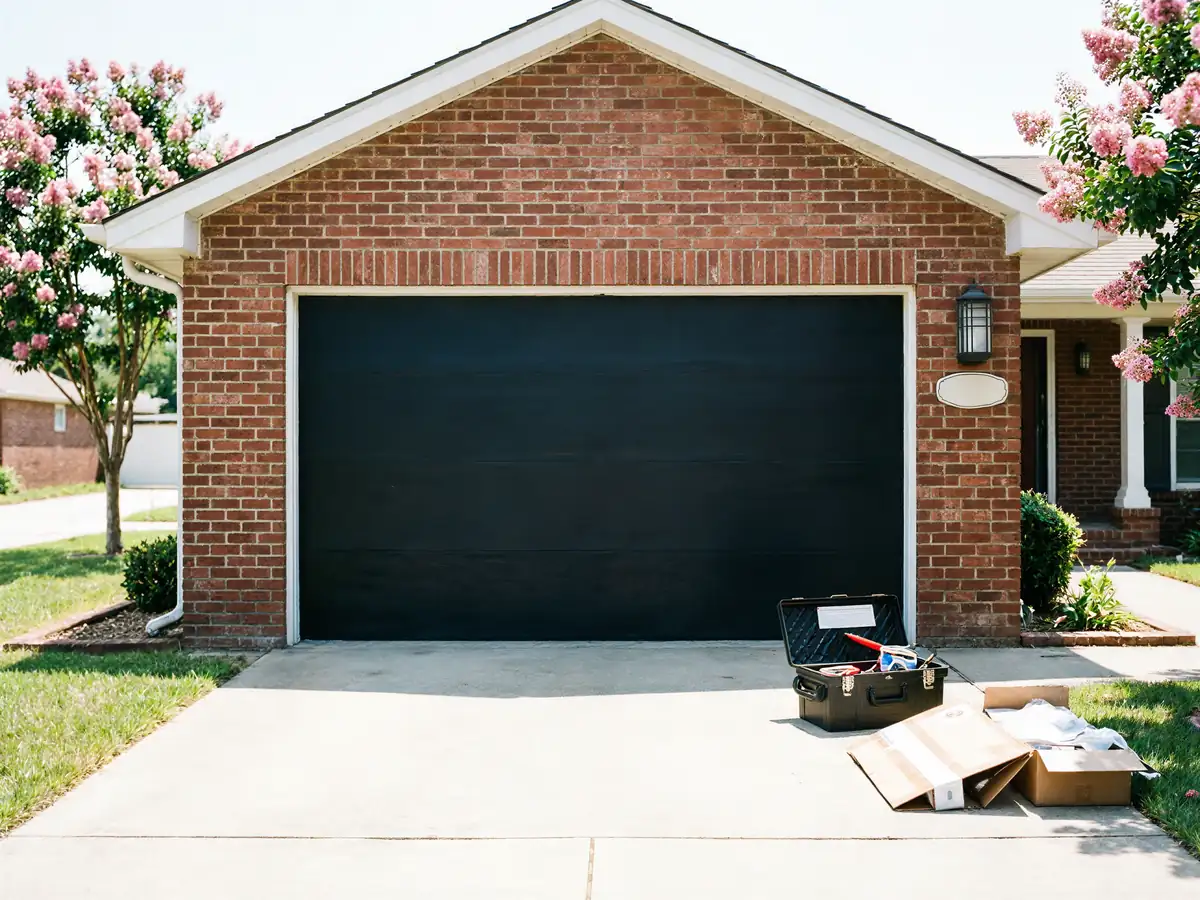
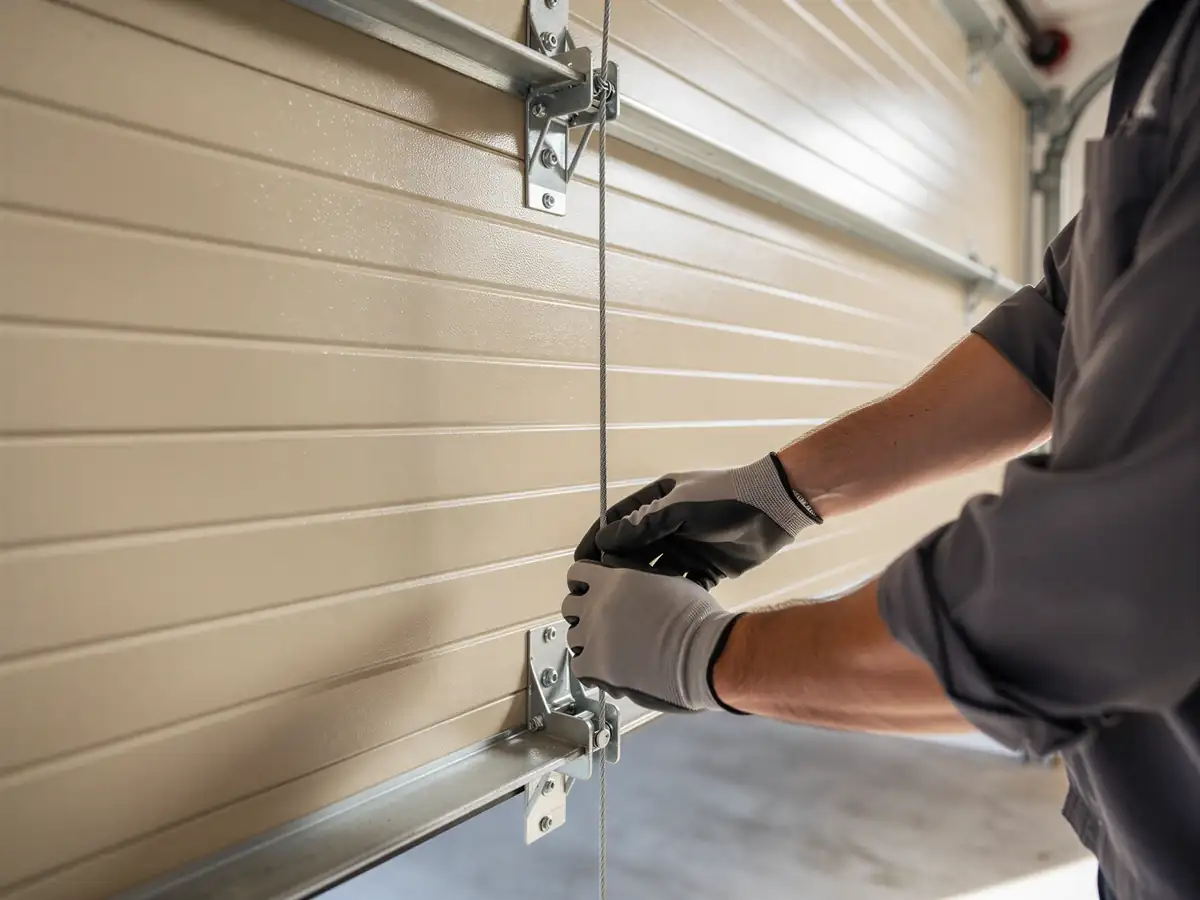
For a standard cable job - 7x19 or 7x7 aircraft cable, drums, and the clips or fittings that match older galvanized setups - the truck carries stock sized for the double and single door spans typical of 1980s construction here. That covers the bulk of what we see in a neighborhood built mostly between 1978 and 1993.
What we don't carry as stock: cable for unusual drum sizes or odd door widths outside that standard range, and any specialty coil that has to be custom-cut. If your door is a non-standard width or has had a replacement opener system swapped in that changed the drum spec, that's a quote-and-order situation, not a same-visit fix. We'd rather tell you that up front than have you wait on the driveway while we figure it out.
Given the age of the housing stock in this part of the county, we also expect to find the matching side - the other cable, the drum, the end bearing plate - showing the same four decades of wear. We carry enough of that hardware to deal with it when we see it, but we're not going to pretend every truck roll covers every possible original part.
How Long You Are Without the Door
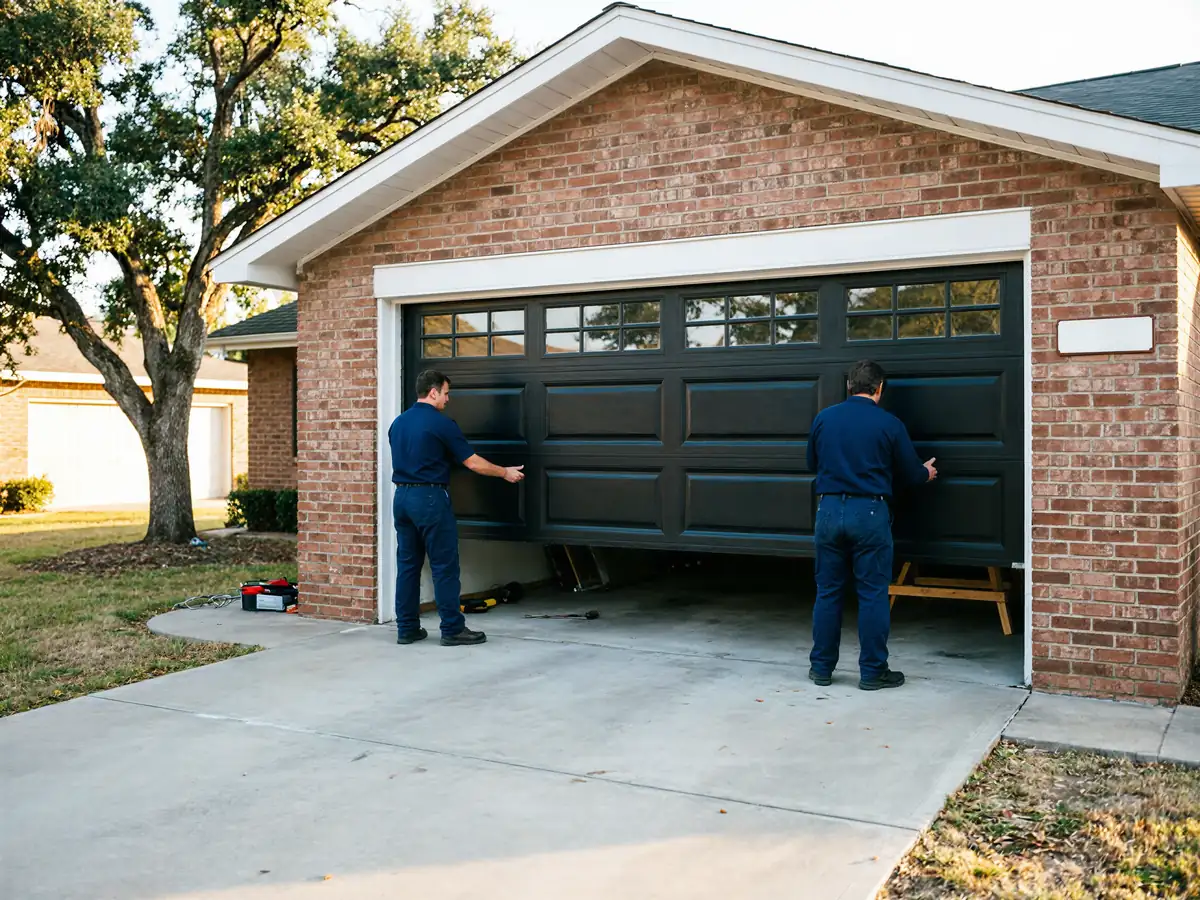
A snapped cable on a torsion-spring double door usually means the door is stuck, often tilted or jammed partway
Until someone gets eyes on it and winds the springs down safely. That's not a DIY wait - a loaded torsion spring and a slack cable together is exactly how people get hurt.
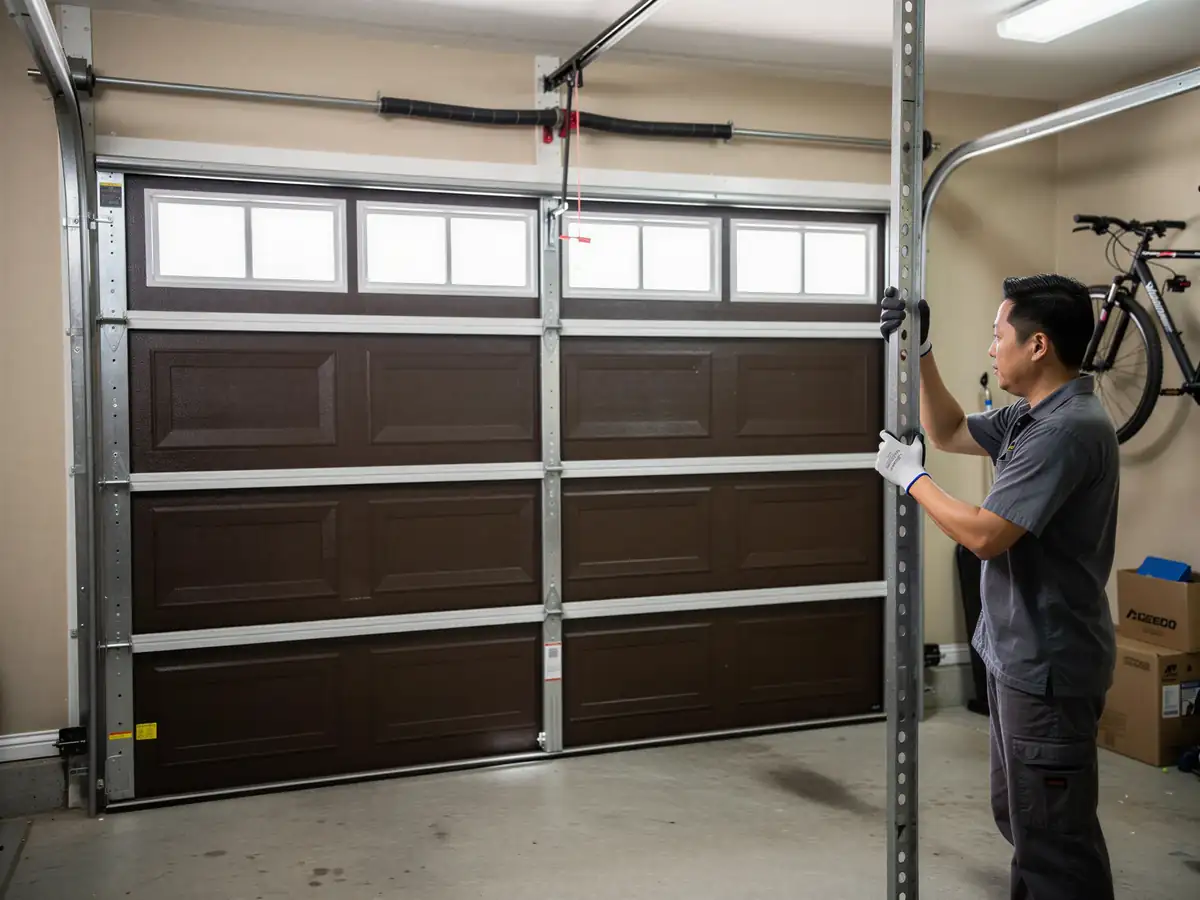
Once we're on site, the cable swap itself is a contained job
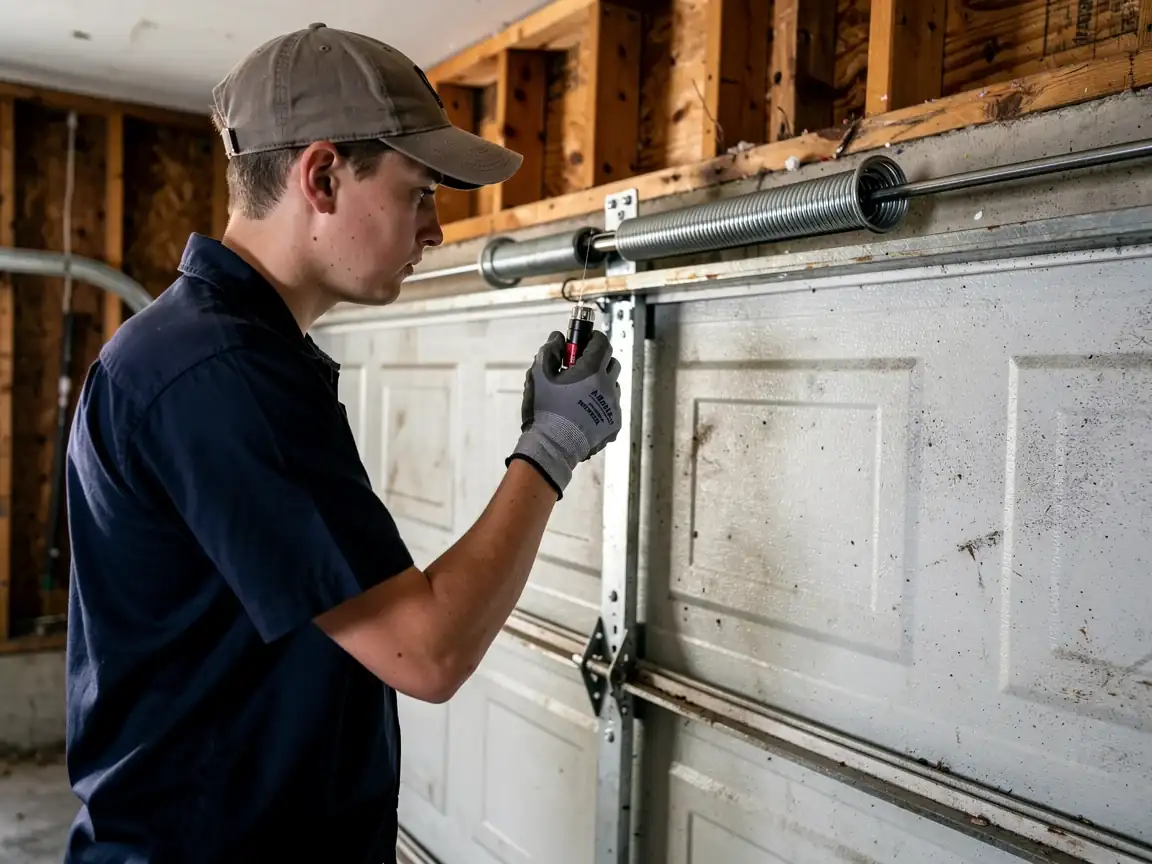
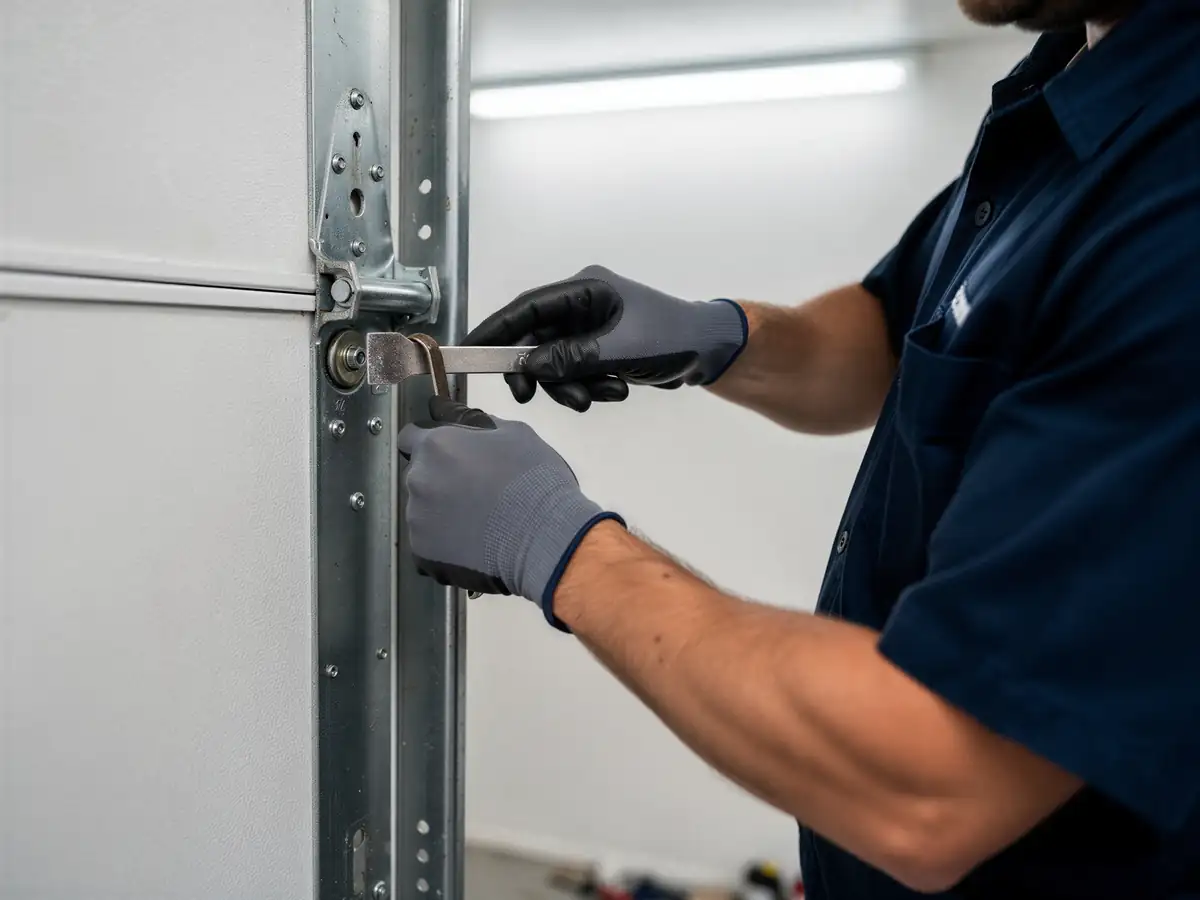
Pull the old cable and drum assembly, check the other side for matching wear, re-cable both sides if the second one is close to failing, and balance the door before we leave. We don't give a guaranteed clock time for how fast we can get to a Hitchcock address, since every job here travels from Galveston first - but once the truck is in the driveway, this isn't an all-day repair.
The honest limitation
If the drum or the end bracket is bent from the door dropping hard on the broken side, that adds time and a part we may not have pre-loaded. We'll tell you on the spot if that's the case rather than guess.
What Can Go Wrong
The thing to watch for on original 1980s hardware isn't just the cable - it's everything the cable was never meant to be replaced alone. If one cable snapped because it's original to a house built around 1983, the drum, the bearing plate, and the spring on that side have the same birthday. Swap the cable and leave the rest, and you're back out here in a year for the next piece.
A door that's dropped on one side from a broken cable can also bend the track on that side, especially on a double door where the panel racks sideways before anyone notices. That's a separate repair from the cable itself, and it's the kind of thing that turns a $200 call into something bigger if the door's been left hanging crooked for a few days.
The other risk is cosmetic damage nobody thinks about: a panel scraping against a bent track or a dropped corner catching the slab can crack a door skin that's been fine for forty years. None of that is guaranteed to happen - plenty of cable failures here are clean, single-point breaks with no collateral damage. But on hardware this old, we check the whole side, not just the part that snapped.