Why It Happens Here
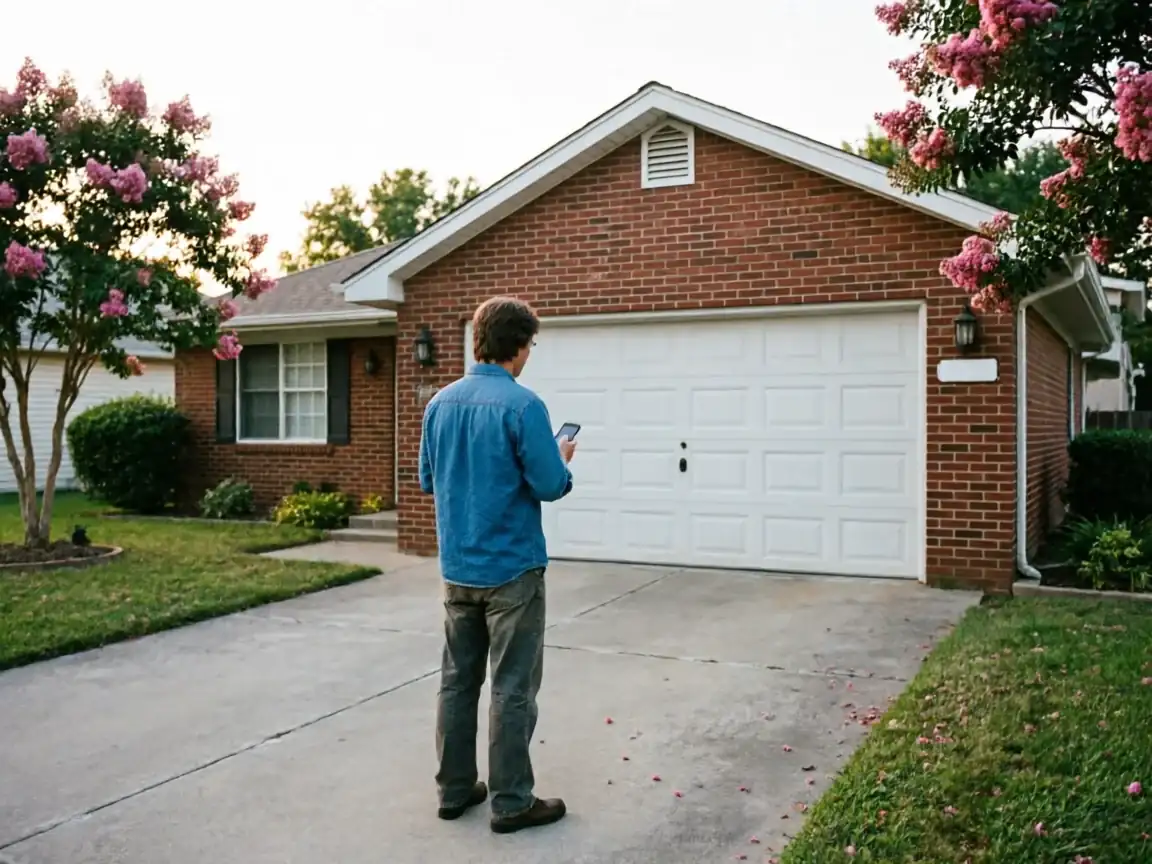
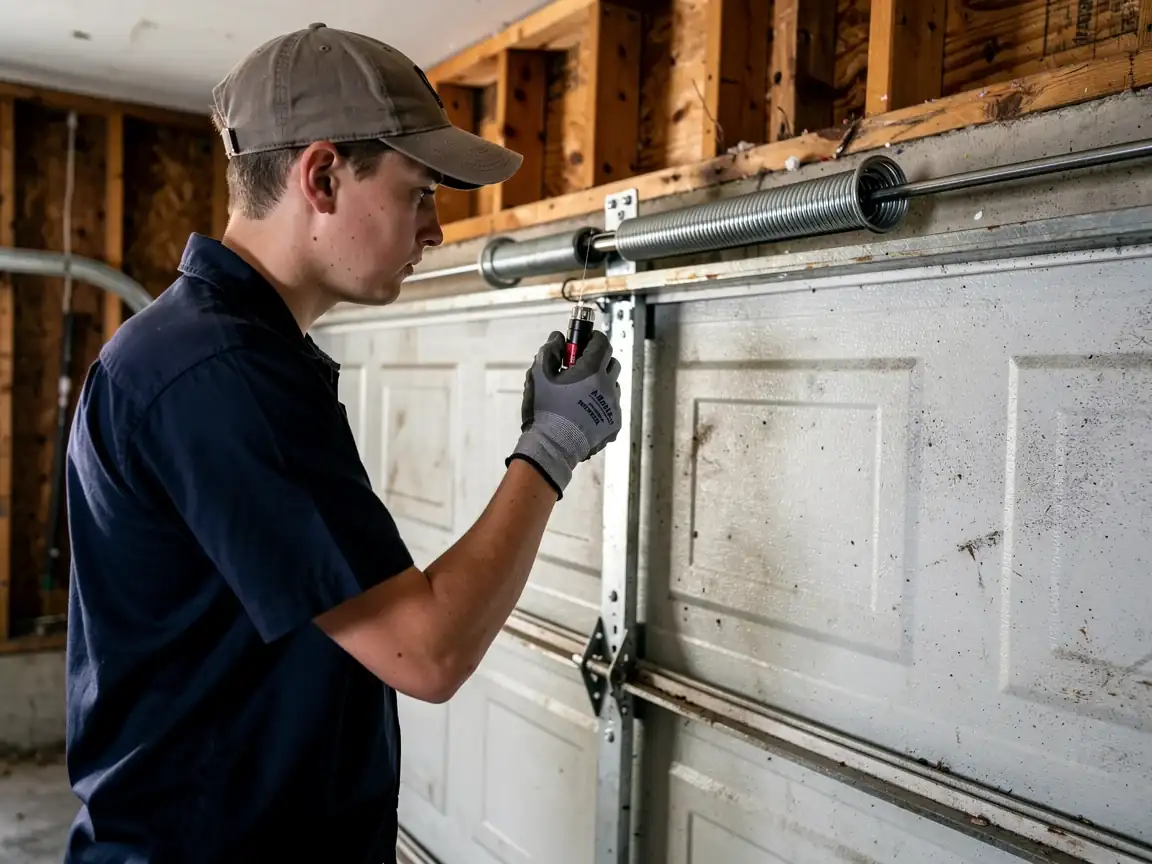
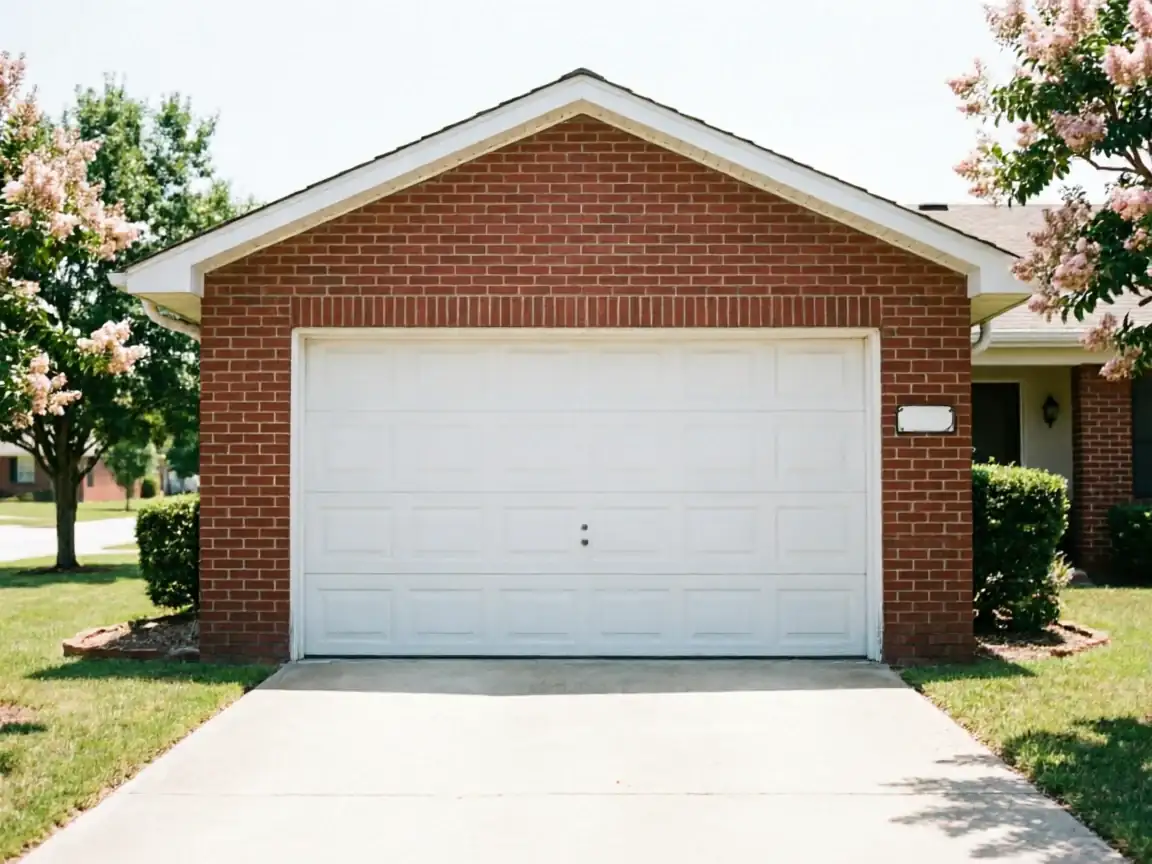
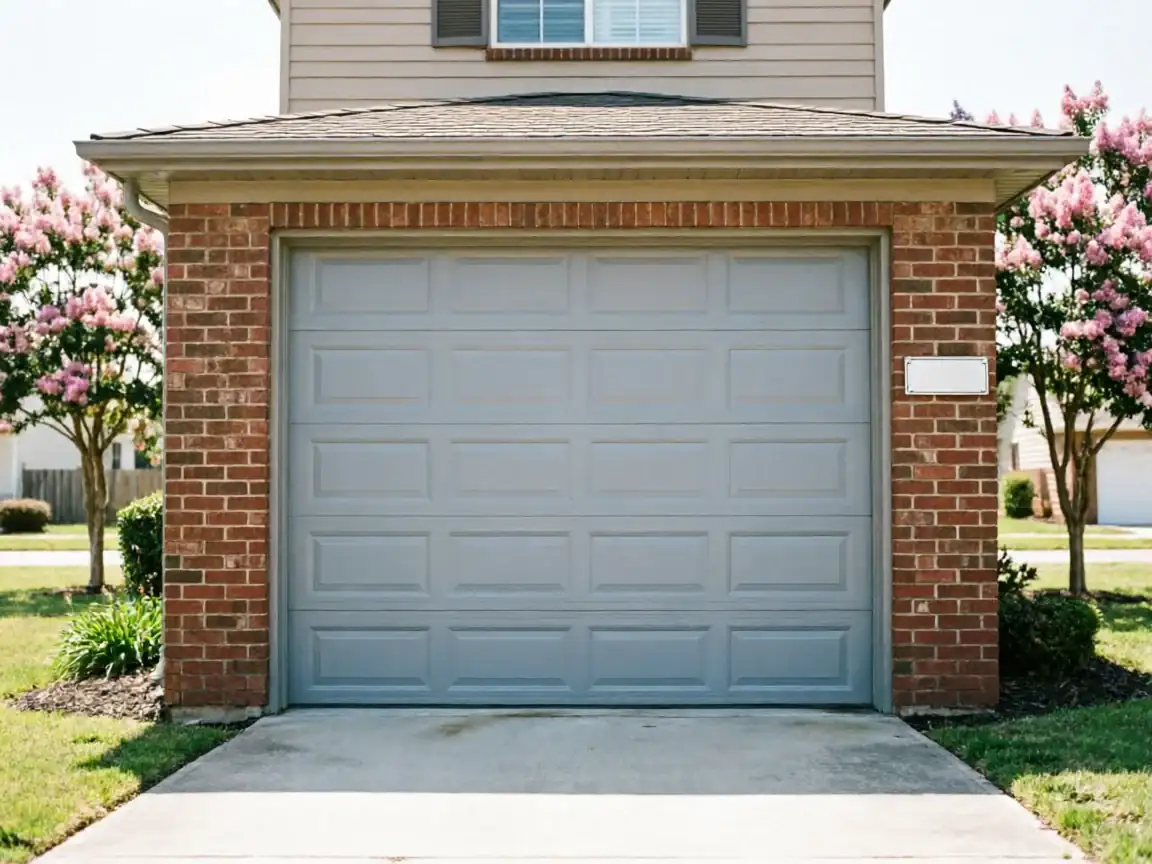
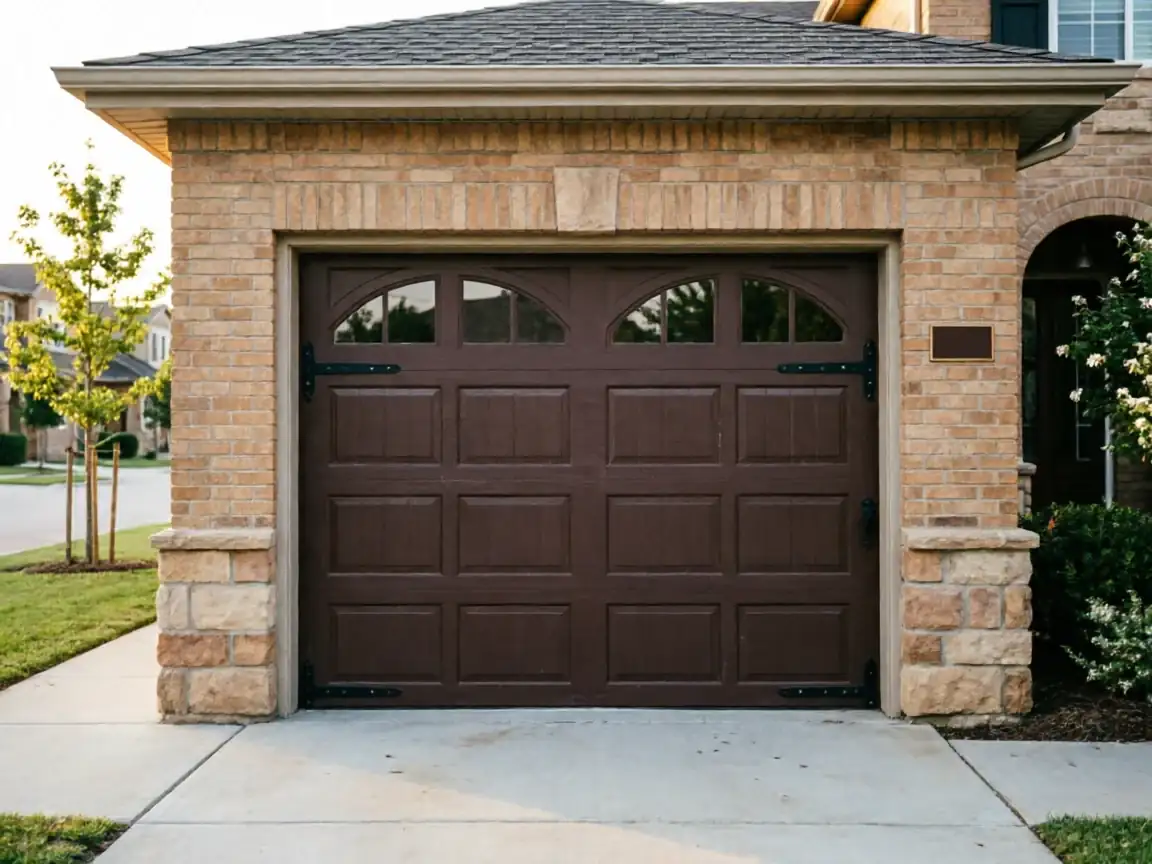
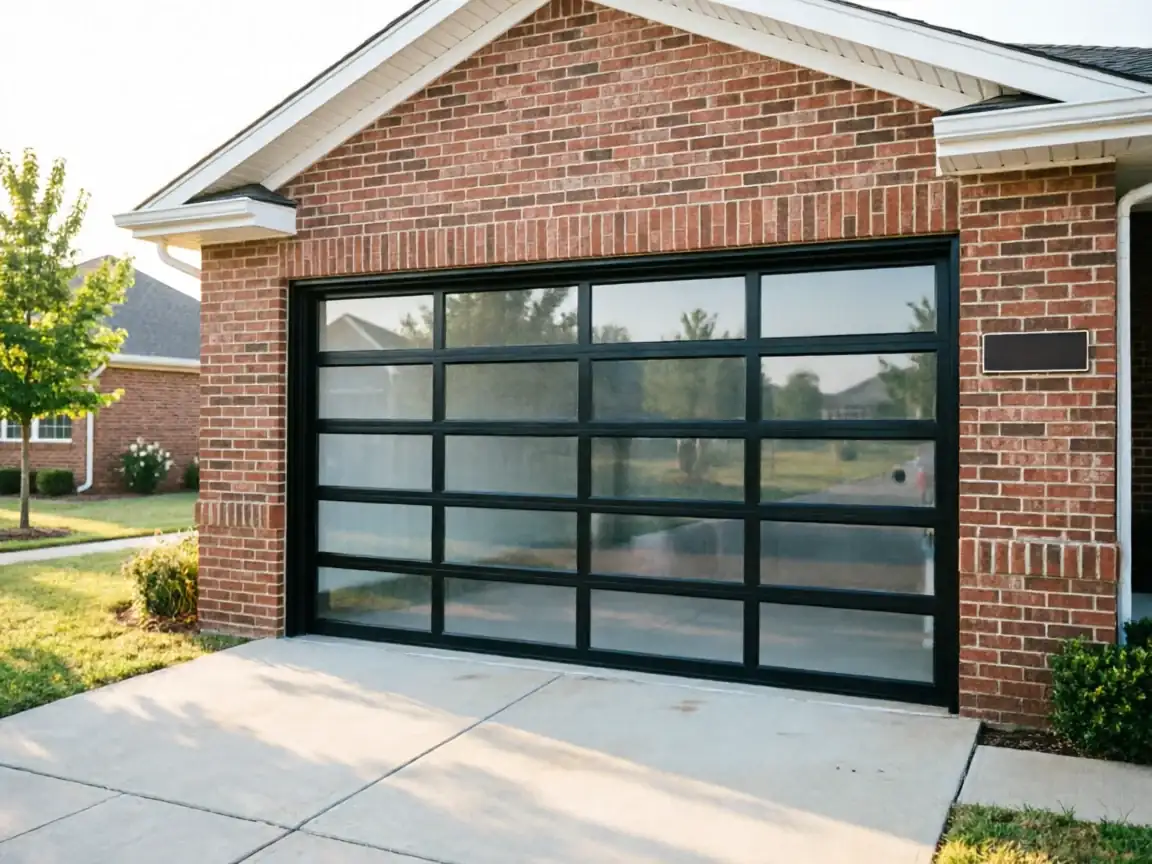
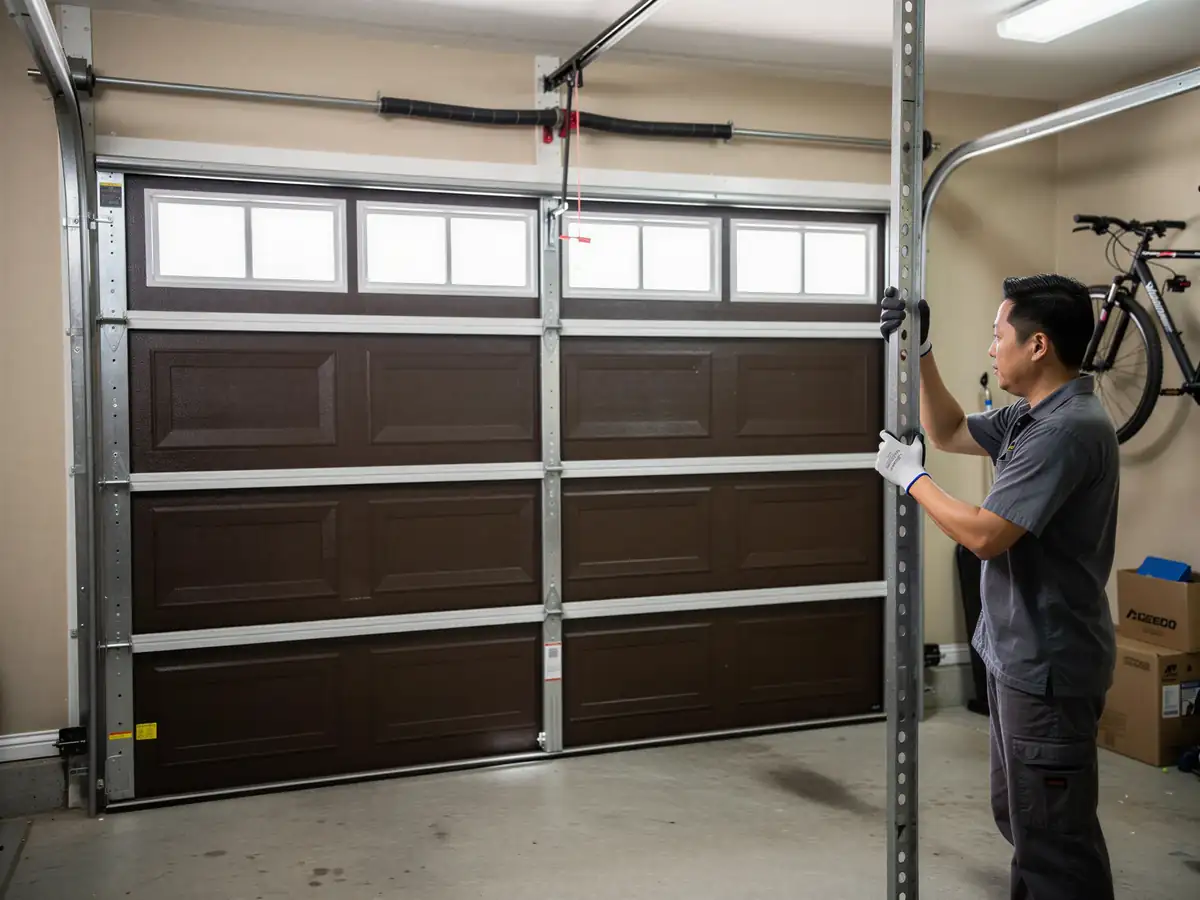
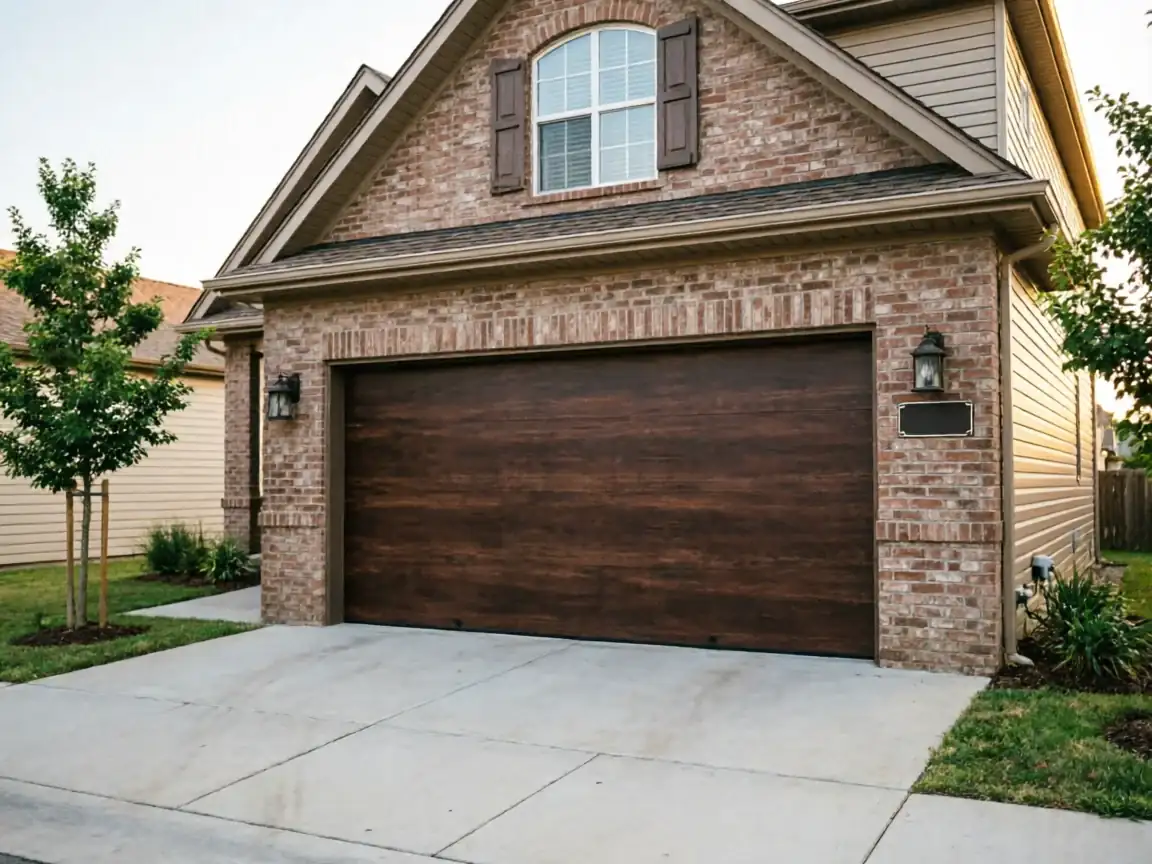
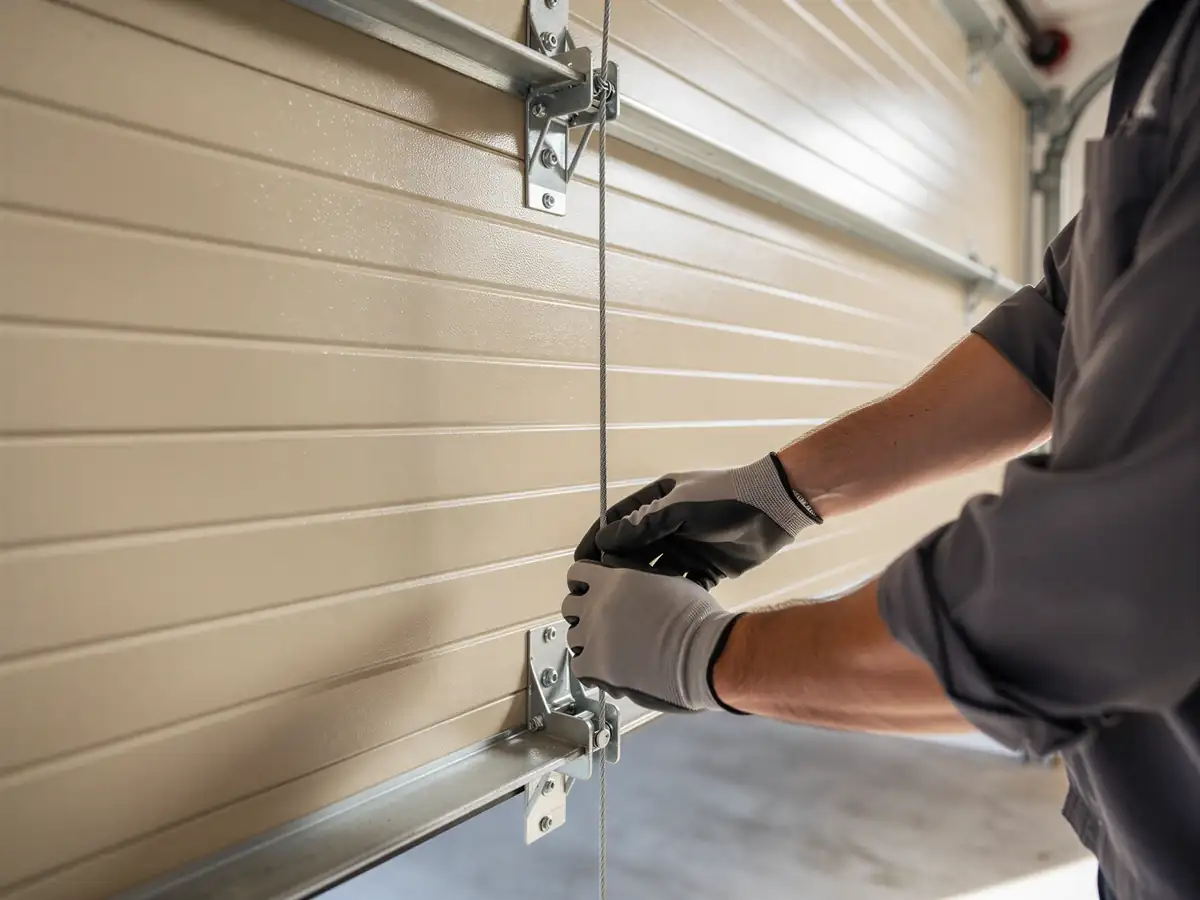
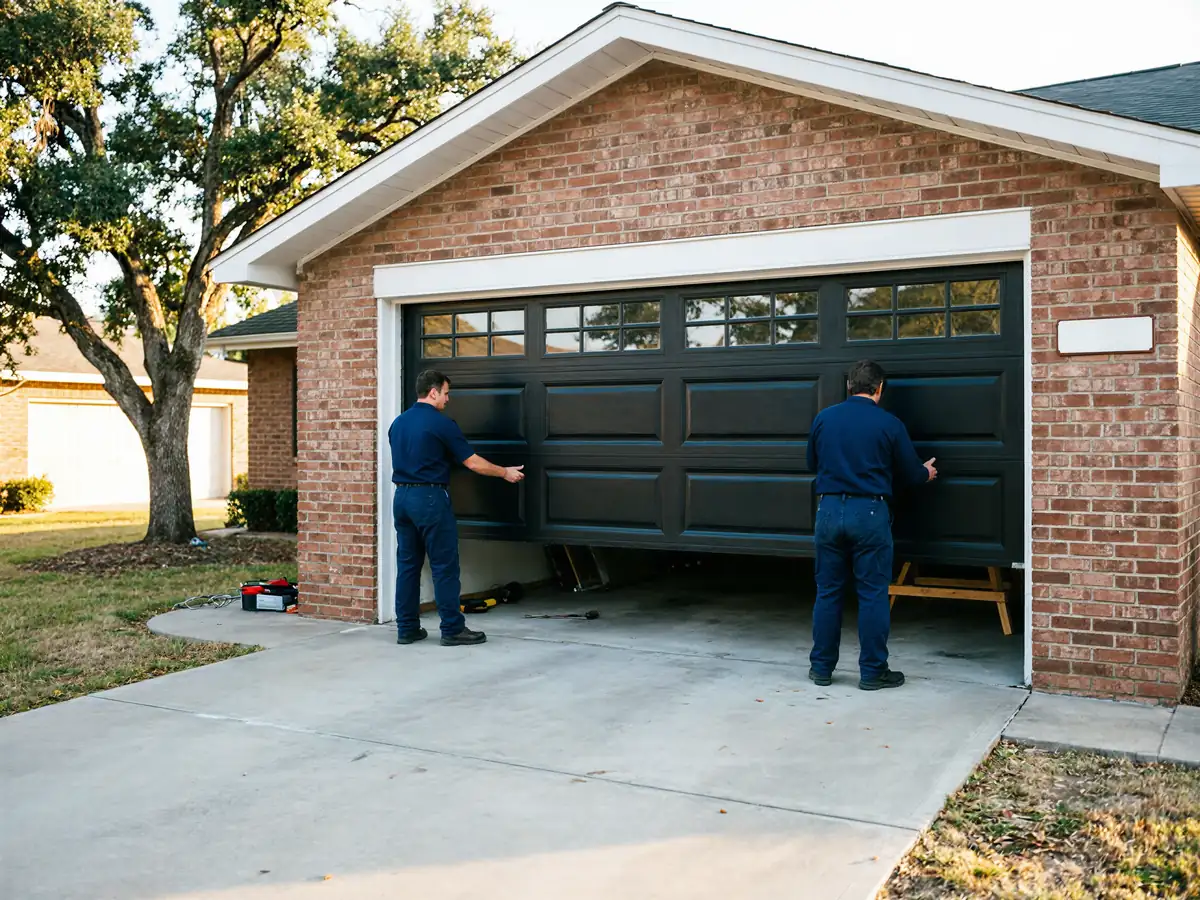
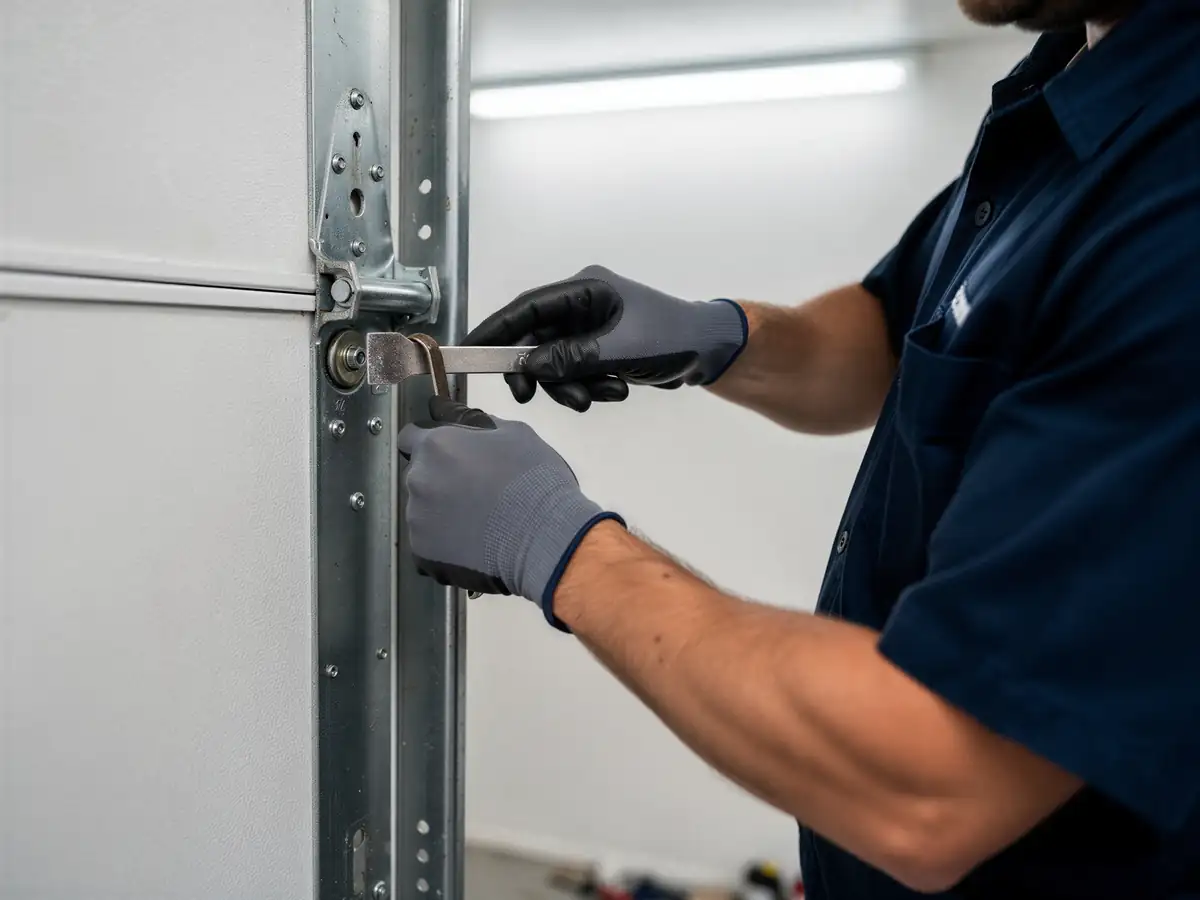
Hitchcock's housing stock centers on 1983, and that puts most garage doors in town squarely in the steel sectional era - single doors on one side for the older single-car layouts, double doors on galvanized roller track for the rest. That hardware was built to a decent standard for its day, but forty-some years of opening and closing wears the same three spots every time: the roller brackets that bolt to the door edge, the track seams where sections join, and the hinges that let the door flex around the bend at the top of the track. Loosen any one of those and the door walks sideways a little more with every cycle until a roller finally jumps the rail entirely. The mild coastal climate here doesn't freeze hardware solid the way a harder winter would elsewhere, but humidity still works on unpainted brackets and track bolts over three or four decades, and a loose track is loose whether the air is damp or dry. We see this pattern often enough in town that it's not really a surprise call anymore - it's what a door this age does.
What Is on the Truck
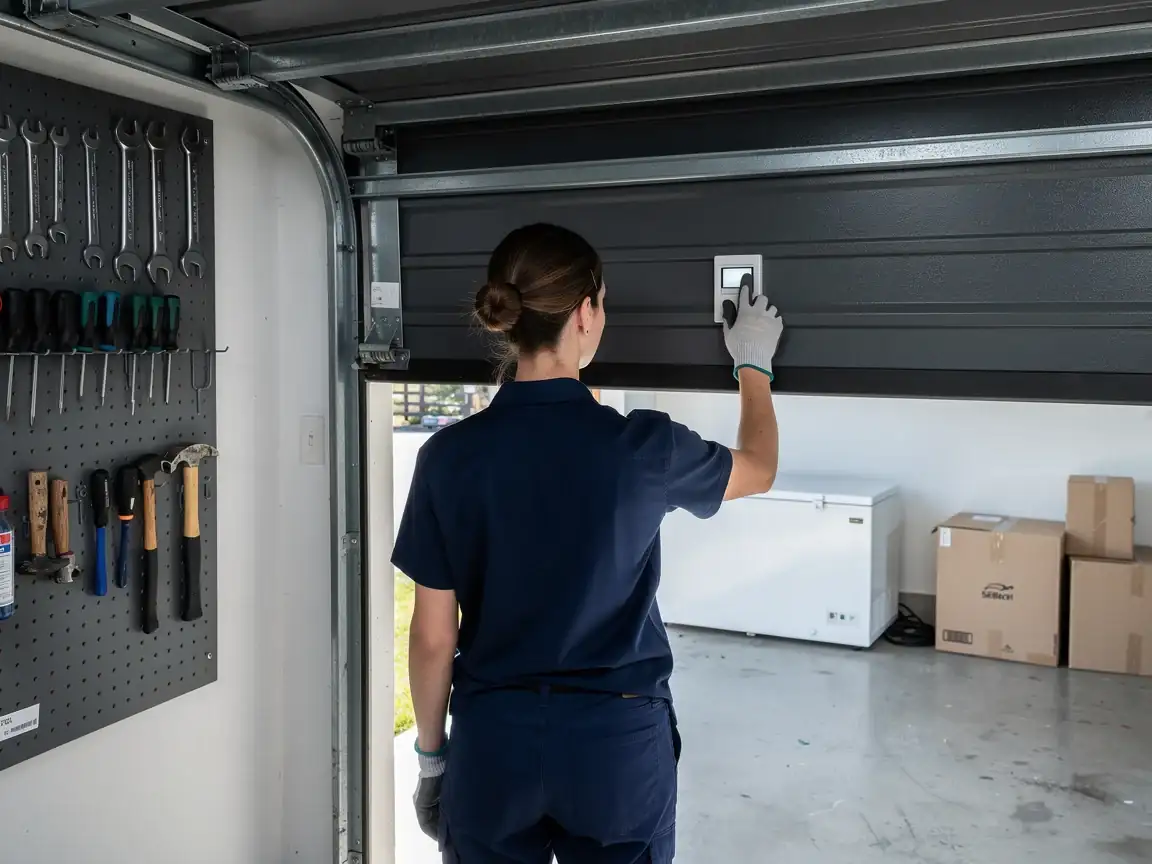
We come from Galveston, seven miles down the road, so what's on the truck is sized for the call before we ever see the driveway. For a town built out mostly in the 1980s and 90s, that means galvanized track sections in the standard residential widths, roller brackets that bolt to older sectional panels, and both nylon and steel rollers - nylon for a quieter fix, steel where the bracket's worn oval and needs a stiffer roller to sit right. We carry extension and torsion cable in the common lengths for single and double doors from that era, along with the hinges and end bearings that usually fail alongside a bent track rather than before it. What we don't carry is every obsolete bracket pattern a door this old might have used - some of the original one-piece hardware from the early 80s was never standardized, and if we hit something like that, we'll tell you straight whether it's a custom-order part or a case for swapping the track section rather than chasing an exact match.
What Can Go Wrong
The real risk with an off-track door isn't the door - it's what's still under tension next to it. A torsion spring or a stretched extension cable on a door that's already fighting its track can let go with enough force to hurt someone, and that risk goes up, not down, the longer a homeowner tries to wrestle a jumped roller back into place by hand. We also see people force the opener through it, running the motor against a door that won't travel straight, which usually turns a bent bracket into a cracked panel. At $77,713 median household income in this area, we understand the instinct to fix what's broken rather than replace the whole door, and most of the time that's the right call - a bent section of track or a worn bracket doesn't mean the door is done. But if the panel itself is bowed from being forced, or the track has bent in more than one place, patching it just buys you the same call again in a few months.